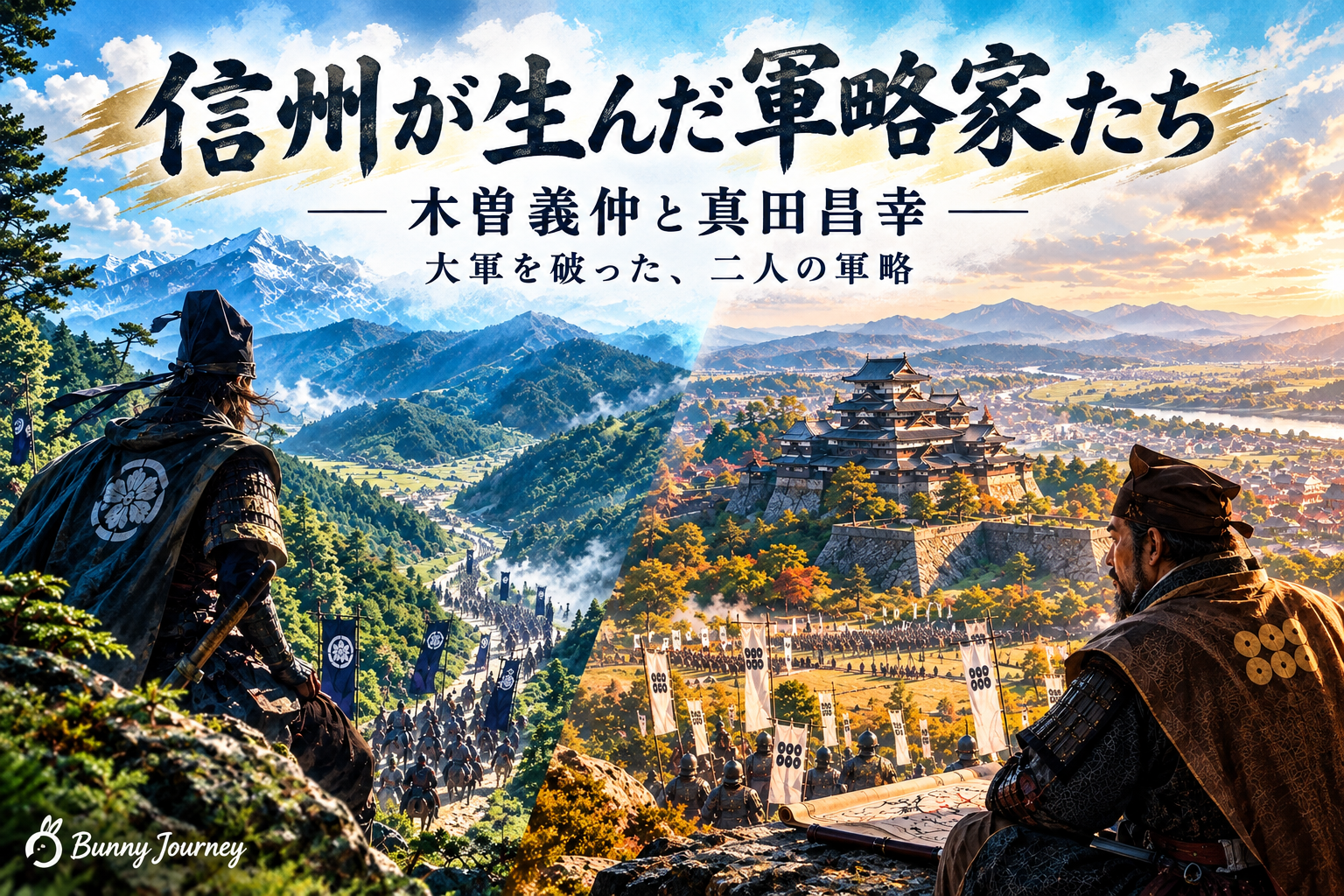
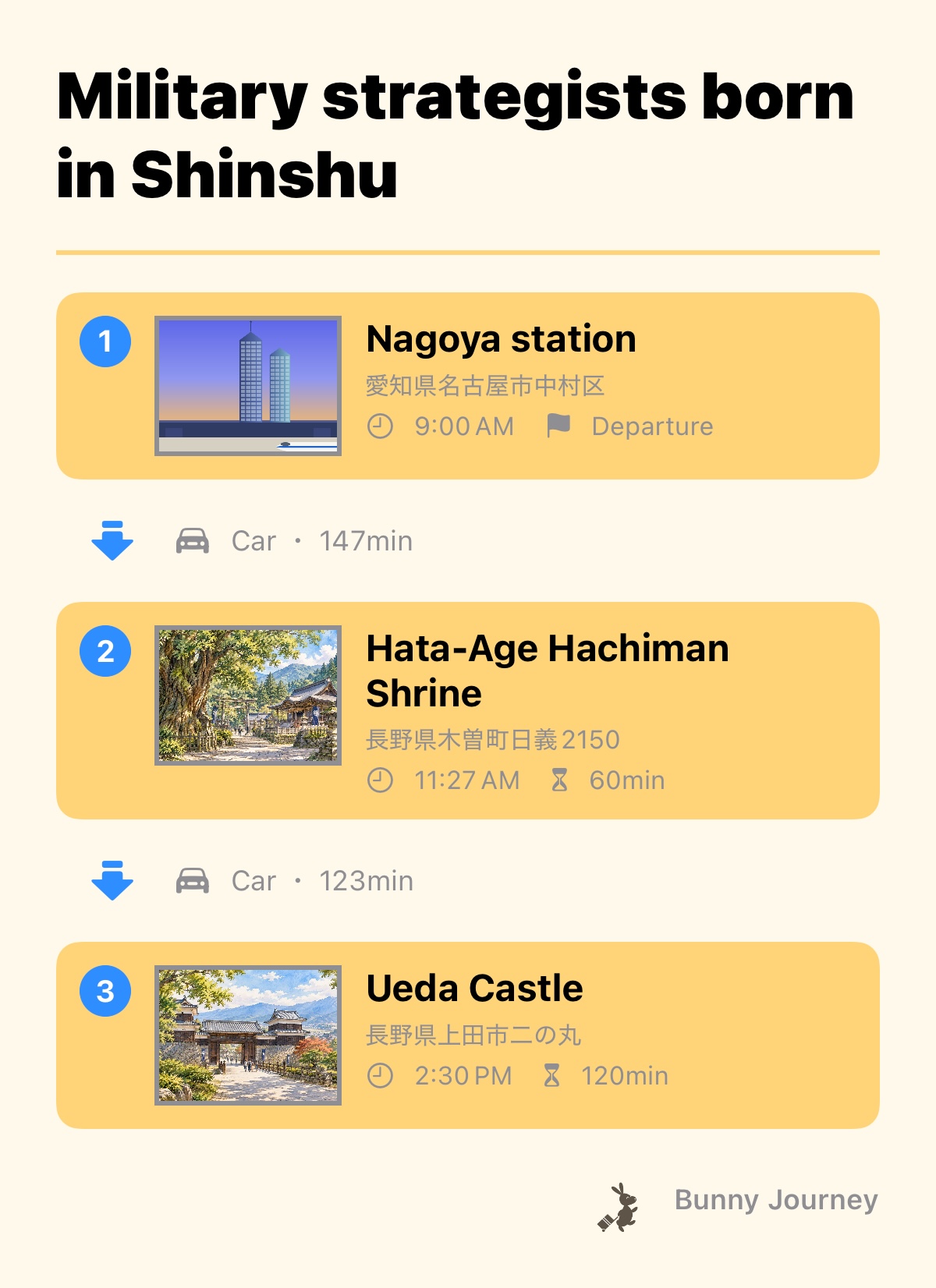
Military Strategists Born in Shinshu
Kiso Yoshinaka and Sanada Masayuki — Two Strategies That Broke Great Armies
In war, does the larger army always win? Shinshu is the land that produced two warlords who proved otherwise. In the closing years of the Heian period, Kiso Yoshinaka, raised in the mountains of Kiso, crushed a massive Taira army at Kurikara Pass. About 400 years later, in that same Shinshu region, Sanada Masayuki held Ueda Castle and turned back a much larger Tokugawa army not once but twice. The two men lived in different eras and faced different enemies, but they shared one thing: neither let a great army fight as a great army. Follow the mountains, passes, rivers, and castle towns of Shinshu, and set out on a journey into the strategies of these two men.
- Number of spots
- 2 spots
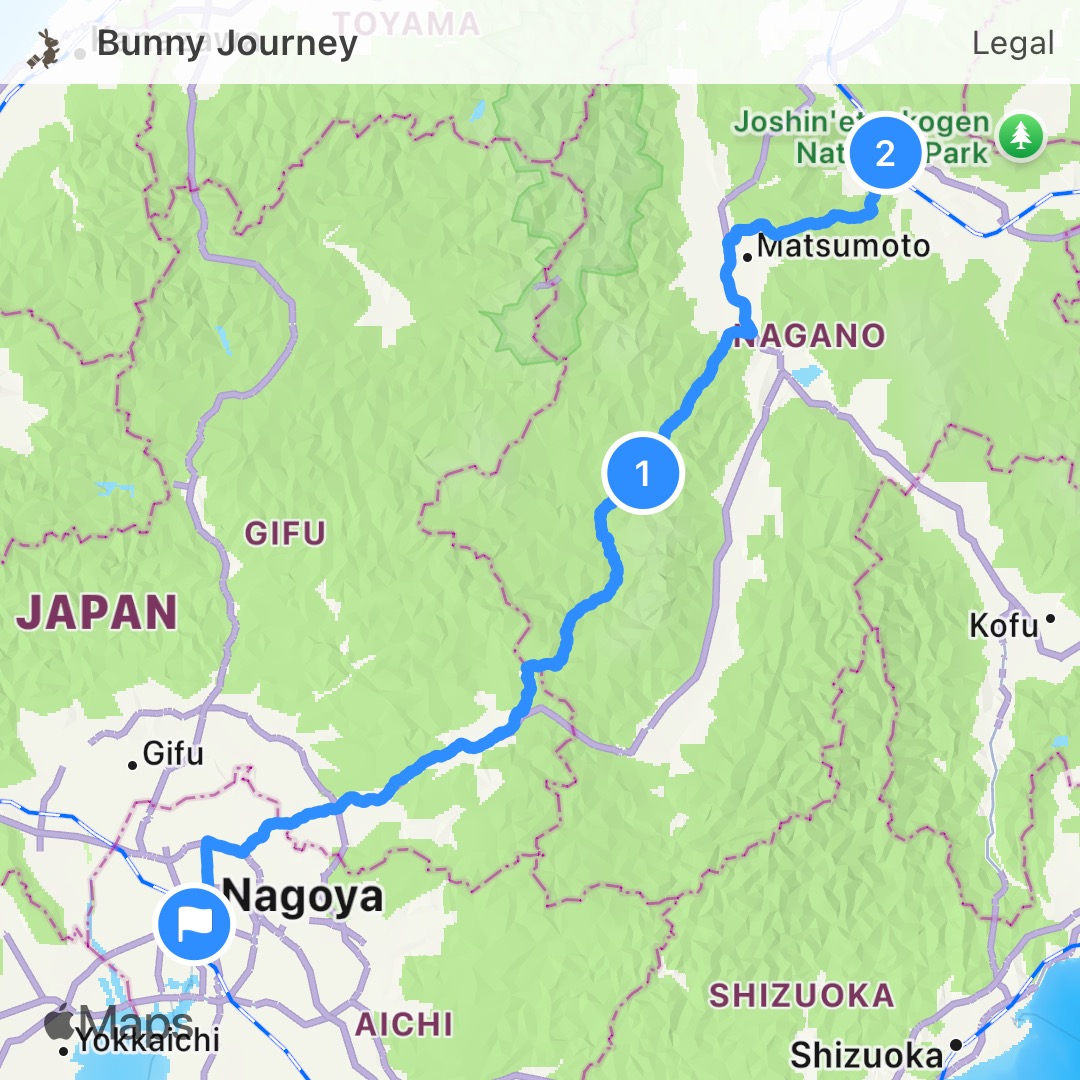
- Travel distance (approx.)
- approx. 83.4km
- Start point
- Hata-Age Hachiman Shrine
- End point
- Ueda Castle
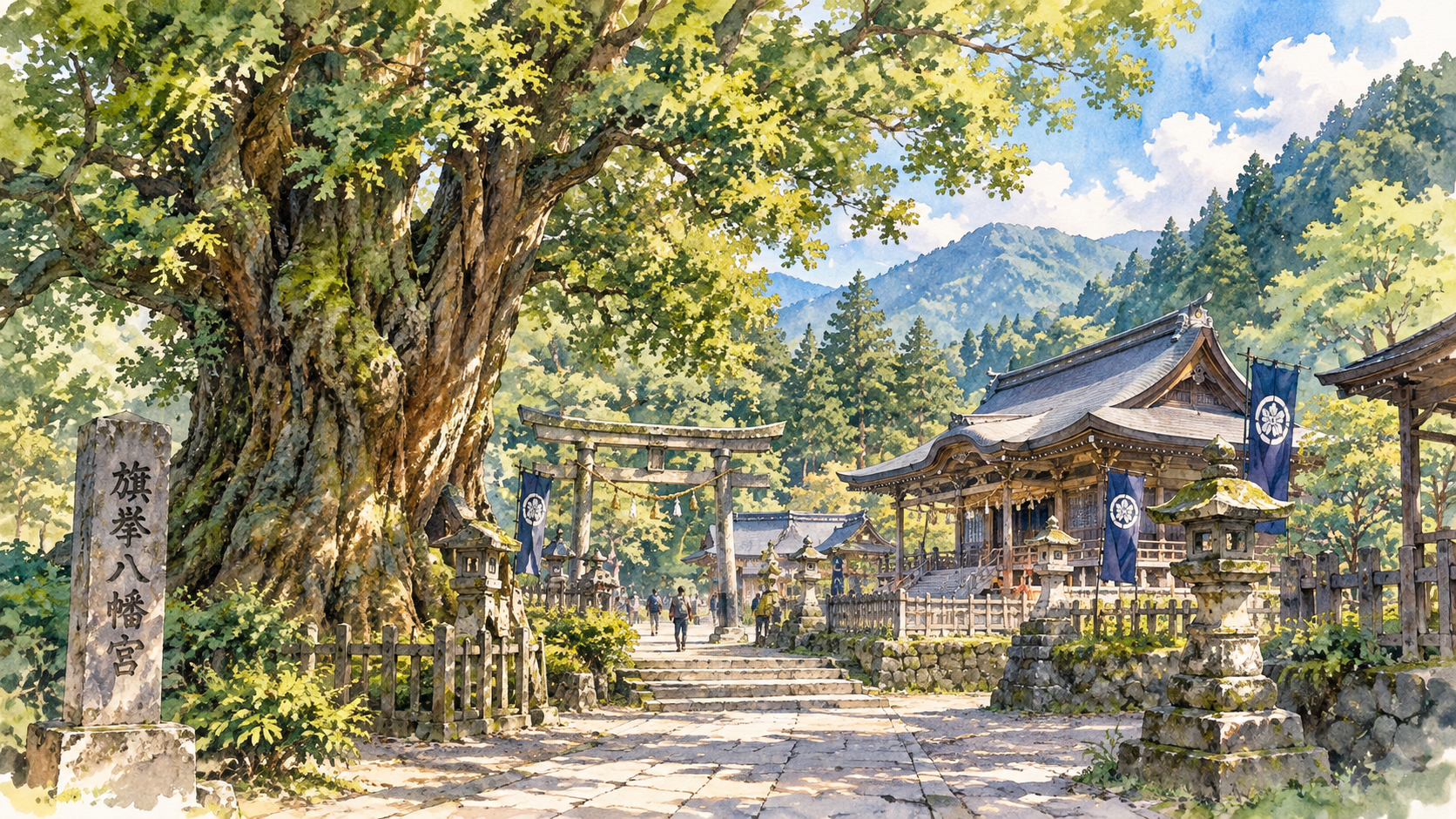
Hata-Age Hachiman Shrine
長野県木曽町日義2150
A shrine where Kiso Yoshinaka is said to have come of age at 13 and, in 1180, raised his army against the Taira clan. On the grounds stands a great zelkova tree said to have lived since Yoshinaka's own time, with an estimated age of over 800 years, and the approach through the mountains still evokes the atmosphere of that era.
Our journey begins at Hata-Age Hachiman Shrine in Kiso. It was here, tradition holds, that Kiso Yoshinaka came of age and later raised his banner against the Taira clan. Three years on, he would crush a much larger Taira army at Kurikara Pass. Let's trace the origin of a warlord who took on a great army with a small one.
Kurikara Pass: Breaking a Great Army in a Mountain Pass
Kiso Yoshinaka grew up in the Kiso valley, and in 1166, at age 13, he came of age here at what is now Hata-Age Hachiman Shrine, together with his foster father Nakahara Kanetō. Fourteen years later, in 1180, having received an edict from Prince Mochihito, Yoshinaka is said to have raised an army of over a thousand horsemen against the Taira clan at this very shrine. The great zelkova tree on the grounds is said to have been planted to mark either his coming-of-age ceremony or his raising of arms — but this remains a tradition, not a confirmed fact, and there is no historical record proving Yoshinaka planted it himself. Three years after raising his banner, in 1183, Yoshinaka confronted a large Taira army led by Taira no Koremori at Kurikara Pass, on the border of present-day Toyama and Ishikawa prefectures. War chronicles put the Taira force at tens of thousands of horsemen against a few thousand under Yoshinaka, but numbers recorded in war tales from this period are often exaggerated, and the true figures cannot be confirmed. What is certain is that, despite being outnumbered, Yoshinaka chose to fight in a narrow, poor-visibility mountain pass. A large army can bring its numbers to bear on open ground, but in a bottleneck like a mountain pass, only a fraction of its troops can fight at once — its size becomes a liability rather than an advantage. Yoshinaka struck at night, exploiting exactly that weakness. The famous "fire-ox stratagem" — said to have driven a herd of oxen with torches lashed to their horns into the Taira camp — is a vivid episode recorded in later war chronicles such as the Genpei Jōsuiki, but it is not established historical fact. The heart of this battle was never really about the oxen; it was about using terrain to keep a large army from ever fighting as a large army. The Taira forces, thrown into confusion, were driven into a ravine and shattered, and Yoshinaka marched on to Kyoto.
Featured in this story: Kiso Yoshinaka
Next: Ueda Castle — a bit further out (about 83.4km as the crow flies). Taking a train or bus is recommended
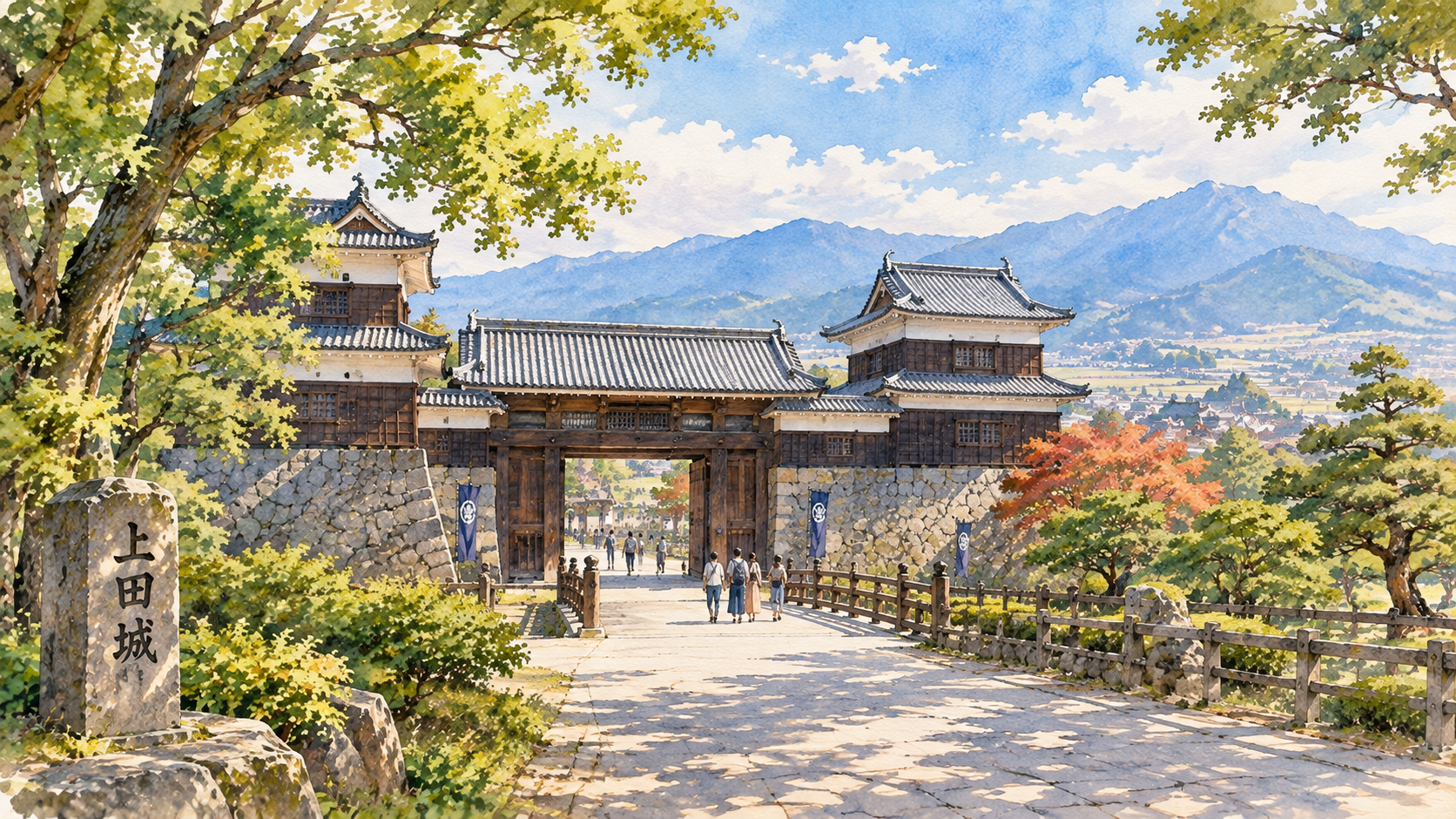
Ueda Castle
長野県上田市二の丸
A flatland castle built by Sanada Masayuki in 1583. The surviving Higashi-Koguchi Yagura-mon gate and other structures were rebuilt by the Sengoku clan during the Edo period, so none of the buildings from Masayuki's own time remain today. Even so, standing here — with the Amagafuchi cliffs along the Chikuma River serving as a natural moat — it's easy to sense the strength of a castle that turned back a much larger Tokugawa army not once but twice.
Leaving Hata-Age Hachiman Shrine, our story leaps forward roughly 400 years. In that same Shinshu region, another warlord would face a great army: Sanada Masayuki, holding Ueda Castle. Yoshinaka's strategy of using terrain to break a large army resurfaces here, centuries later, in a new form.
Ueda Castle: Repelling a Great Army Twice
About 400 years later, in that same Shinshu region, another warlord would face down a much larger army: Sanada Masayuki. In 1583, Masayuki built Ueda Castle on the tip of a river terrace formed by the Chikuma River and its tributary. To the south, the Amagafuchi cliffs along the Chikuma River formed a natural moat; to the north and west, the Yazusawa River served as an outer moat. Without needing large-scale earthworks, the terrain itself made the castle a stronghold. That defense was first tested in 1585, at the First Battle of Ueda. A Tokugawa force of roughly 7,000 under Torii Mototada advanced on Ueda along the Hokkoku highway, while the Sanada side defending the castle numbered only around 2,000 by most accounts — the Tokugawa force held an overwhelming numerical advantage. But as the Tokugawa army crossed the Kanagawa River, Masayuki launched a surprise attack, then feigned retreat to lure them into the castle town. He set the town ablaze and had nearby farmers raise banners to make it look as though the Tokugawa force were surrounded by a vast army, throwing them into panic and forcing a retreat. As they withdrew, a separate Sanada unit struck their flank, and many drowned trying to cross the swollen Kanagawa River. It was a battle that used not just the castle itself, but the castle town, the river, and the surrounding terrain as one continuous battlefield. That this was no fluke was proven fifteen years later, in 1600, at the Second Battle of Ueda. As the conflict that would become the Battle of Sekigahara took shape, Masayuki parted ways with his eldest son, Nobuyuki, who sided with the eastern (Tokugawa) army, while Masayuki himself and his second son, Nobushige (later known as Sanada Yukimura), holed up in Ueda Castle for the western side. They drew Tokugawa Hidetada's large army deep toward the castle, hit it with concentrated fire, and held it there for roughly five days. That delay — compounded by bad weather along the way — meant Hidetada's army failed to reach the main battle at Sekigahara on September 15 of that year. It would be an overstatement to say those five days at Ueda decided the outcome of the battle for supremacy over Japan, but they were, at the very least, a blow the Tokugawa side could not ignore.
Featured in this story: Sanada Masayuki
Never Let a Great Army Fight as a Great Army.
From Hata-Age Hachiman Shrine to Ueda Castle — two warlords, separated by roughly 400 years, chose not to meet force with force, but to make the mountains, passes, rivers, and castle towns of Shinshu work in their favor. Trace their strategies, and the land itself starts to look like another weapon entirely.
- Hata-Age Hachiman Shrine: Where Yoshinaka's Story Begins Hata-Age Hachiman Shrine
- Ueda Castle: Another Strategist Takes the Stage Ueda Castle
This journey is ready to use in the app
We're sharing a file with all the spots and schedule from this article. Download it and import it from the "Schedule" tab in the Bunny Journey app to take this journey with you.
* If you don't have the app yet, install it from the App Store first.