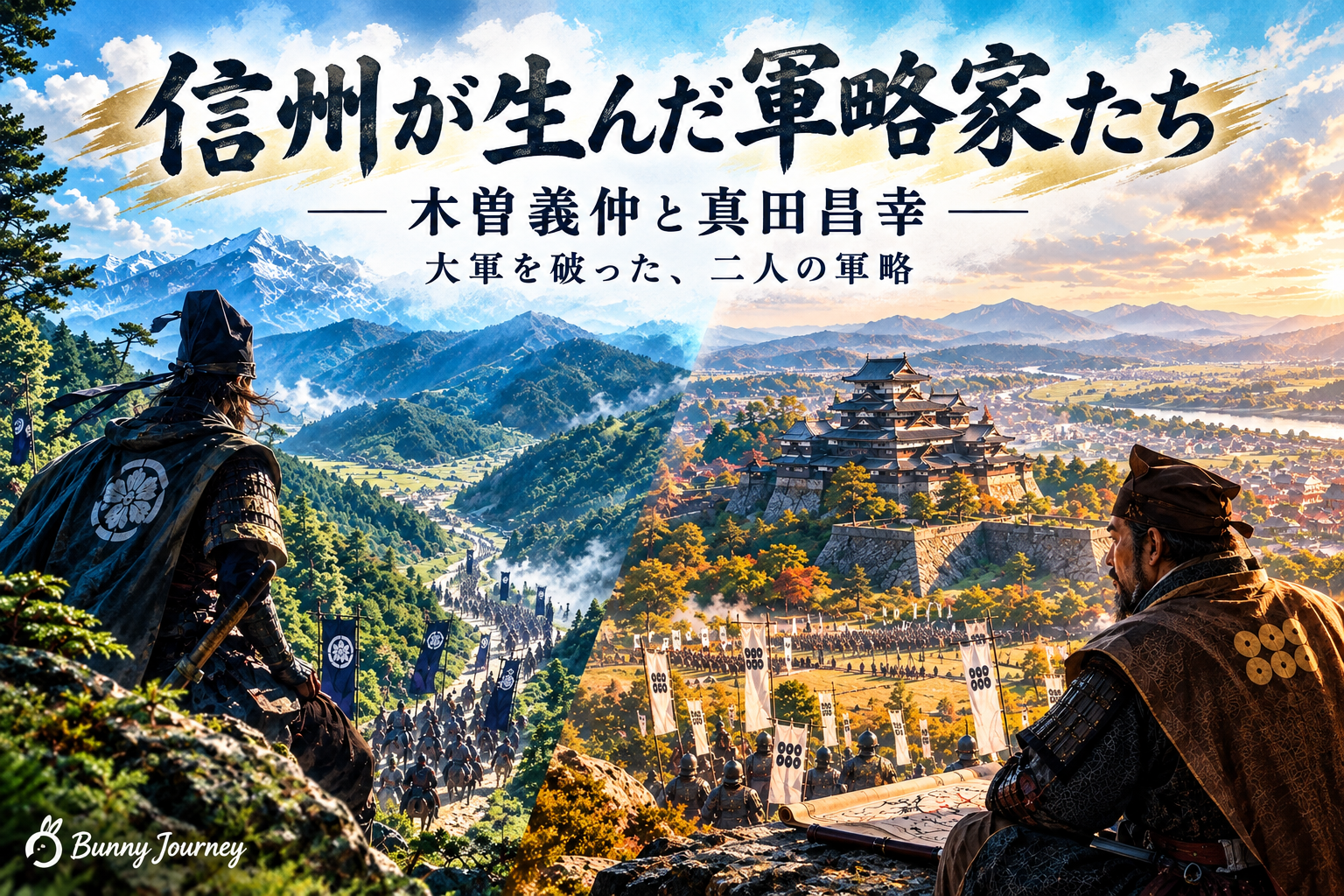
Ueda Castle: Repelling a Great Army Twice
歴史事件
About 400 years later, in that same Shinshu region, another warlord would face down a much larger army: Sanada Masayuki. In 1583, Masayuki built Ueda Castle on the tip of a river terrace formed by the Chikuma River and its tributary. To the south, the Amagafuchi cliffs along the Chikuma River formed a natural moat; to the north and west, the Yazusawa River served as an outer moat. Without needing large-scale earthworks, the terrain itself made the castle a stronghold. That defense was first tested in 1585, at the First Battle of Ueda. A Tokugawa force of roughly 7,000 under Torii Mototada advanced on Ueda along the Hokkoku highway, while the Sanada side defending the castle numbered only around 2,000 by most accounts — the Tokugawa force held an overwhelming numerical advantage. But as the Tokugawa army crossed the Kanagawa River, Masayuki launched a surprise attack, then feigned retreat to lure them into the castle town. He set the town ablaze and had nearby farmers raise banners to make it look as though the Tokugawa force were surrounded by a vast army, throwing them into panic and forcing a retreat. As they withdrew, a separate Sanada unit struck their flank, and many drowned trying to cross the swollen Kanagawa River. It was a battle that used not just the castle itself, but the castle town, the river, and the surrounding terrain as one continuous battlefield. That this was no fluke was proven fifteen years later, in 1600, at the Second Battle of Ueda. As the conflict that would become the Battle of Sekigahara took shape, Masayuki parted ways with his eldest son, Nobuyuki, who sided with the eastern (Tokugawa) army, while Masayuki himself and his second son, Nobushige (later known as Sanada Yukimura), holed up in Ueda Castle for the western side. They drew Tokugawa Hidetada's large army deep toward the castle, hit it with concentrated fire, and held it there for roughly five days. That delay — compounded by bad weather along the way — meant Hidetada's army failed to reach the main battle at Sekigahara on September 15 of that year. It would be an overstatement to say those five days at Ueda decided the outcome of the battle for supremacy over Japan, but they were, at the very least, a blow the Tokugawa side could not ignore.
Characters
Sanada Masayuki
ViewSpots
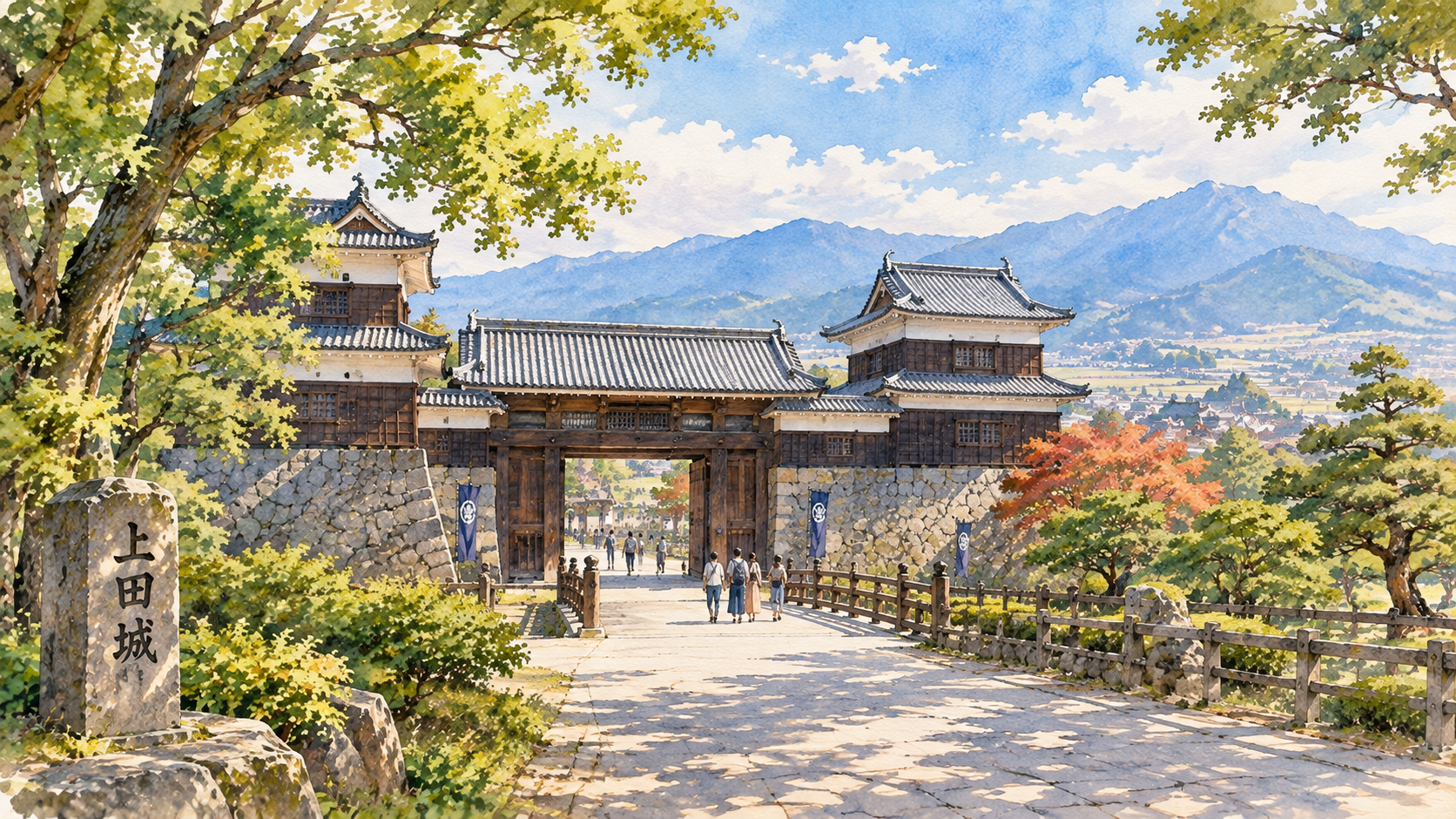
Ueda Castle
ViewJourneys