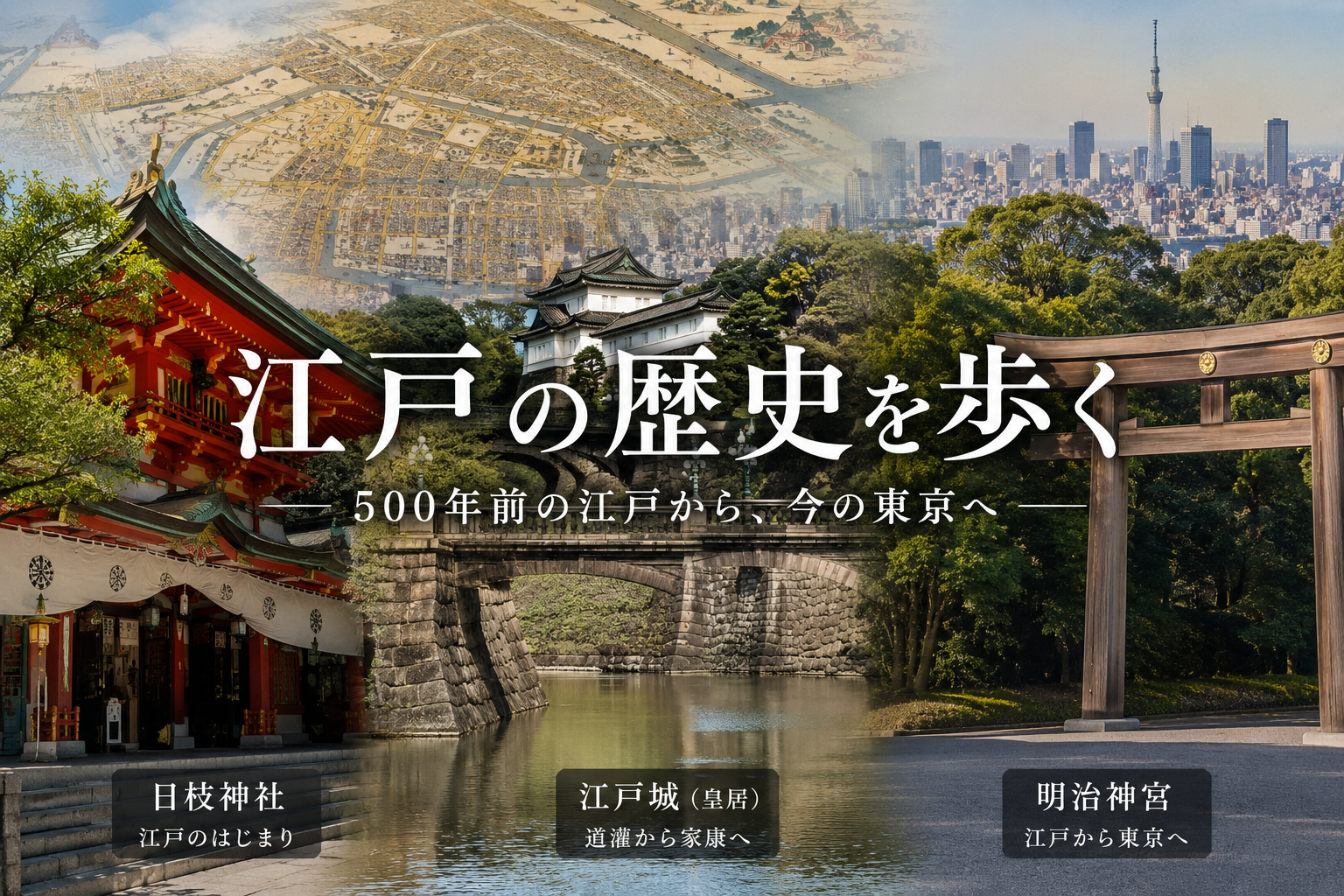
Walking the History of Edo
From Edo, 500 years ago, to the Tokyo of today.
Modern Tokyo, its streets lined with skyscrapers. Beneath it lies a history that stretches back more than 500 years. It began with a single warrior — Ota Dokan — who built a castle on this ground. The Edo that Dokan found was inherited by Tokugawa Ieyasu, grew into one of the largest cities in Japan, and, through the Meiji era, became the Tokyo of today. Hie Shrine, the ruins of Edo Castle, Meiji Jingu: set out on a 500-year journey from Edo to Tokyo, traced through three places you can visit today.
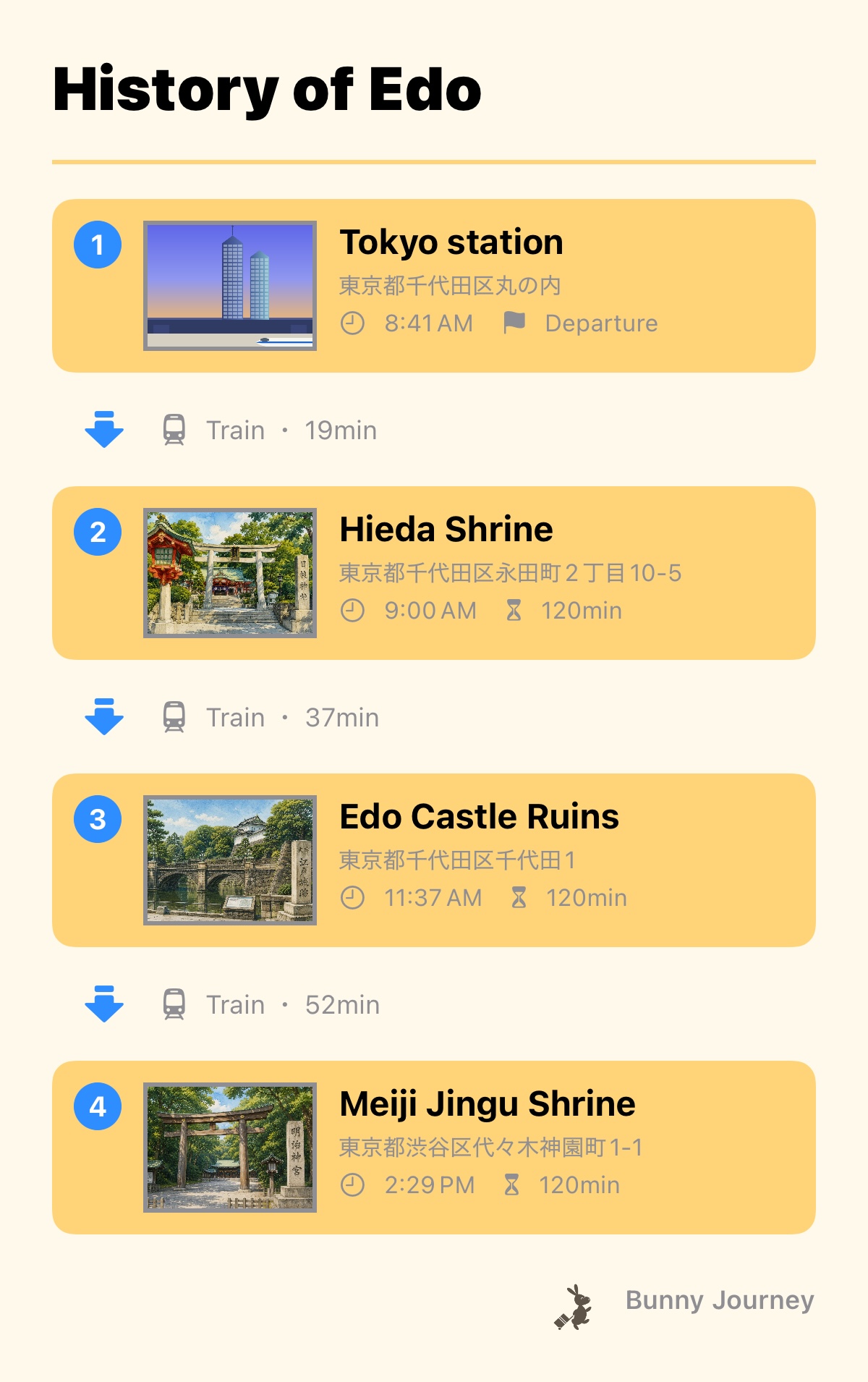
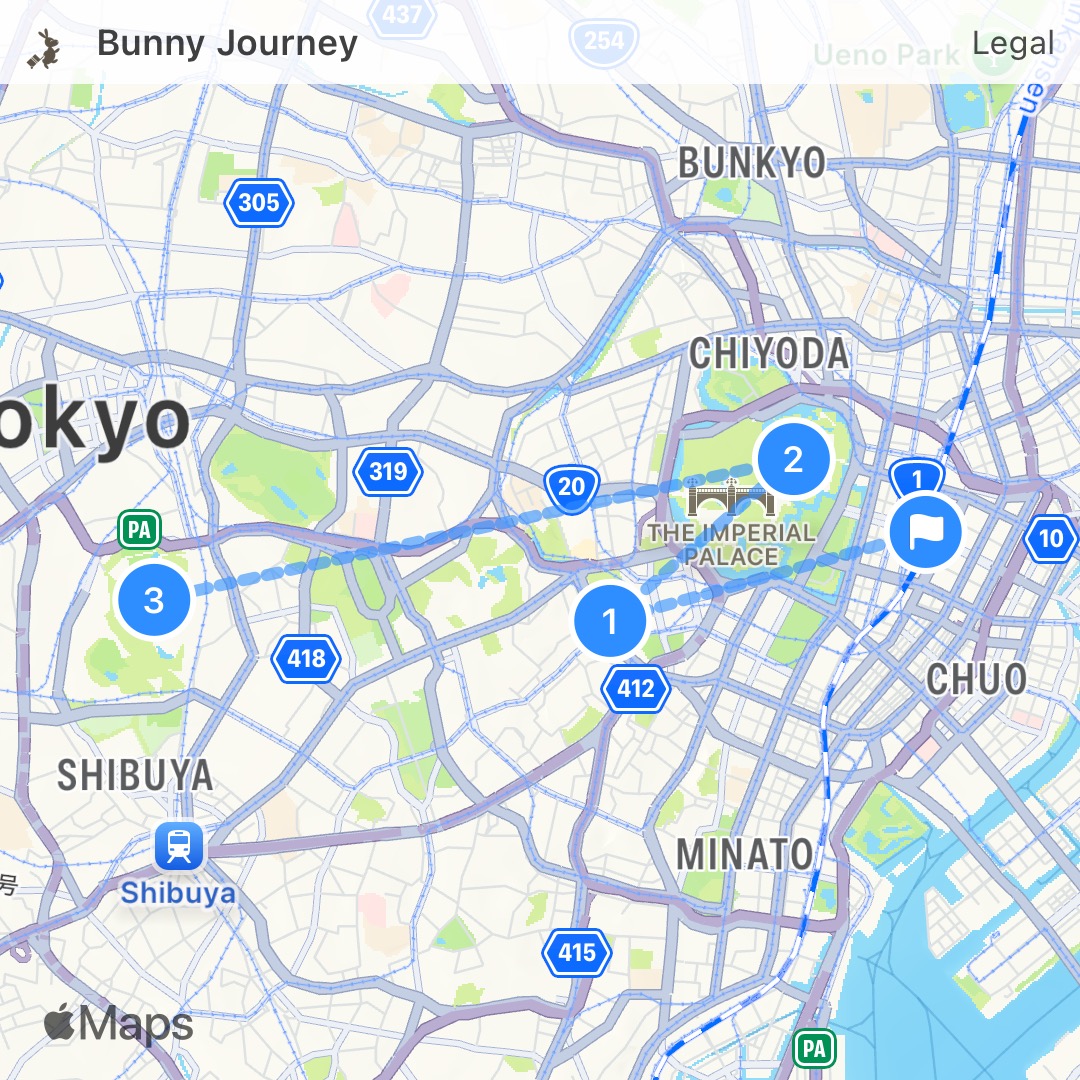
- Number of spots
- 3 spots
- Travel distance (approx.)
- approx. 6.6km
- Start point
- Hie Shrine
- End point
- Meiji Jingu
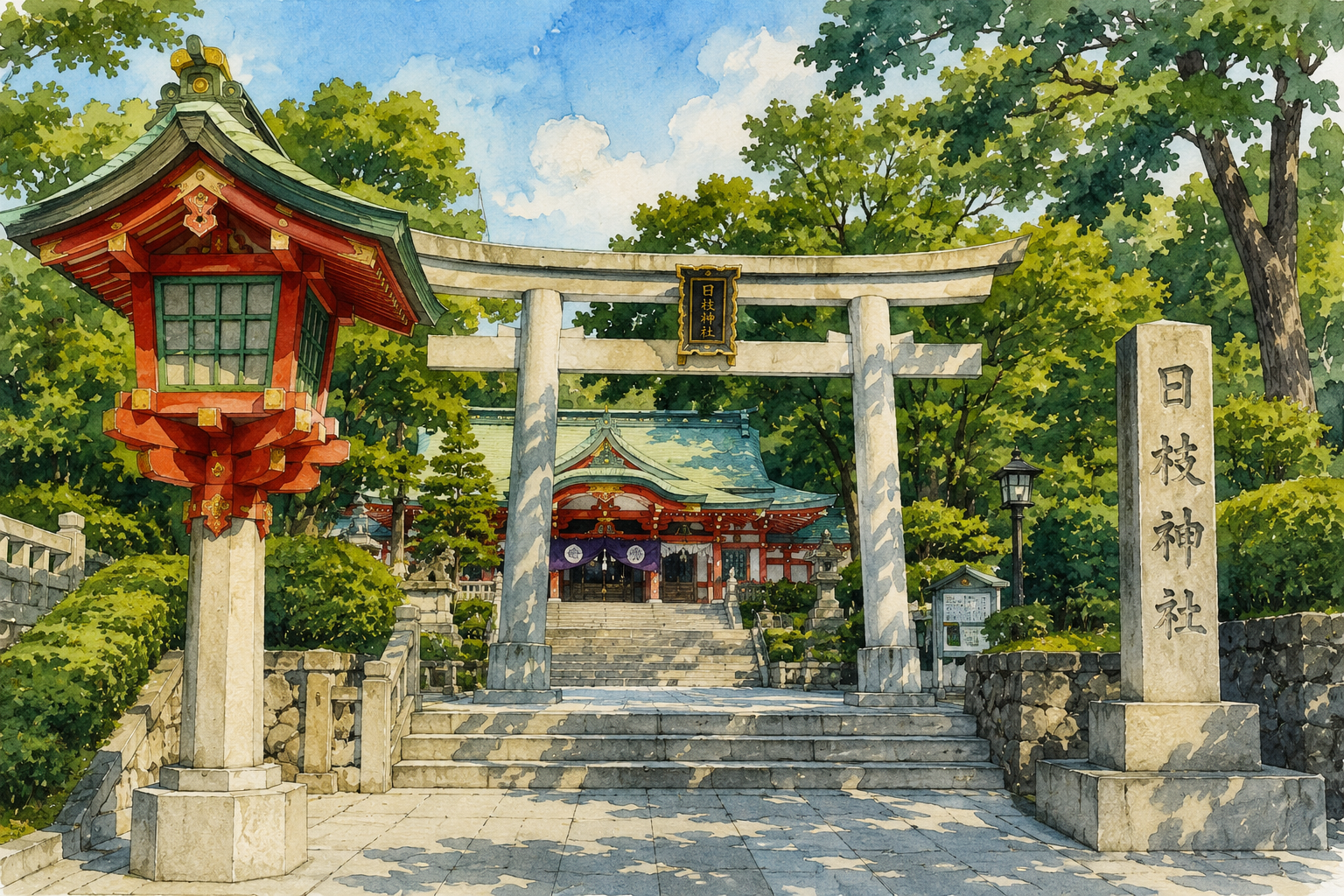
Hie Shrine
東京都千代田区永田町2丁目10-5
A shrine set on a hilltop in the heart of Tokyo, close to the National Diet Building and the Prime Minister's residence. Known affectionately as "Sanno-san," its grounds are unexpectedly green for central Tokyo, with a vermilion Sanno torii gate and stone steps that have stood since the Edo period.
Our journey begins at Hie Shrine. Trace its origins back far enough, and you arrive at a single warrior — Ota Dokan. Hard as it is to imagine from today's Tokyo, more than 500 years ago, a man built a castle on this very ground.
Ota Dokan and the Founding of Edo Castle
In 1457, Ota Dokan, a retainer of the Ogigayatsu branch of the Uesugi clan, built a castle at Edo. At the time, Edo was little more than a small inlet port — nothing like the vast city it would later become — but Dokan is said to have recognized the strategic value of a site that commanded both water and land routes. When he built the castle, Dokan invited the deity Sanno Gongen to be enshrined within the castle grounds as its guardian spirit; this is considered the origin of today's Hie Shrine. Dokan himself was known not only as a skilled warrior but also as a cultured poet. In 1486, however, he was assassinated on the suspicion of his own lord, Uesugi Sadamasa, who feared his growing power.
Featured in this story: Ota Dokan
Next: Edo Castle Ruins — about 21 min on foot (approx.)
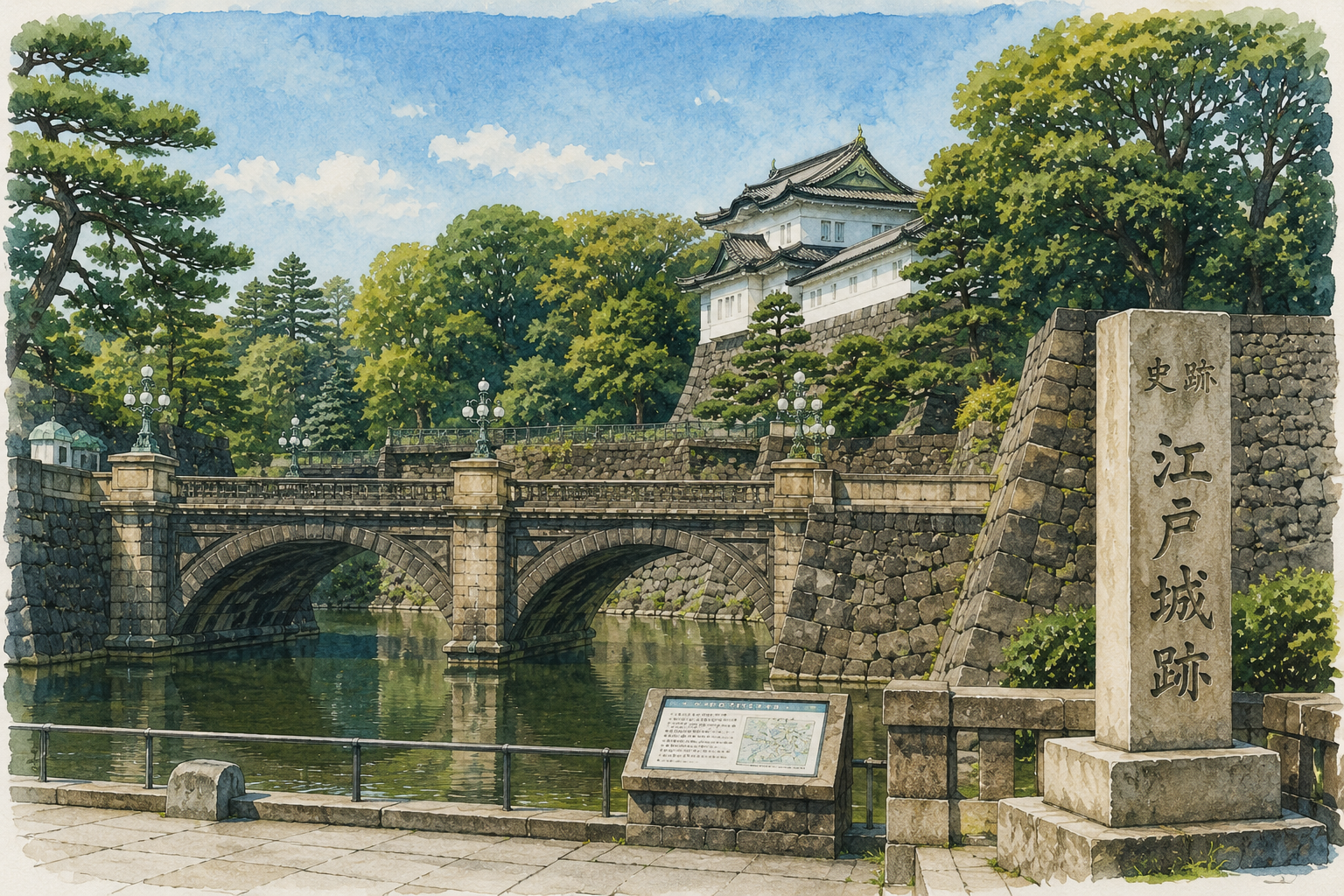
Edo Castle Ruins
東京都千代田区千代田1
The former core of Edo Castle, now the site of the Imperial Palace. Traces of the once-massive castle remain throughout — the Nijubashi bridge, stone walls, and moats. At the East Gardens of the Imperial Palace, visitors can walk right up to surviving structures such as the stone base of the former main keep.
Leaving Hie Shrine, we head to the ruins of Edo Castle, now the Imperial Palace. What kind of place was the Edo that Dokan discovered? And why did Tokugawa Ieyasu choose to make it his own? Let's search for the answer at the former heart of the castle.
Ieyasu Enters Edo
In 1590, after Toyotomi Hideyoshi crushed the Hojo clan in the Siege of Odawara, he ordered Tokugawa Ieyasu to relocate from his home provinces of Mikawa and Totomi to the Kanto region. Rather than Kamakura or Odawara, Ieyasu chose Edo — then home to little more than the old castle Dokan had built generations earlier — as his new base. Ieyasu undertook a massive expansion of Edo Castle, and when he was appointed shogun in 1603, Edo became, in name and in fact, the political center of the shogunate. With the sankin-kotai system requiring domain lords from across the country to maintain residences in Edo, the city's population grew rapidly, and by the 18th century Edo had become one of the largest cities in the world, with a population exceeding one million.
Featured in this story: Tokugawa Ieyasu
Next: Meiji Jingu — a bit further out (about 4.9km as the crow flies). Taking a train or bus is recommended
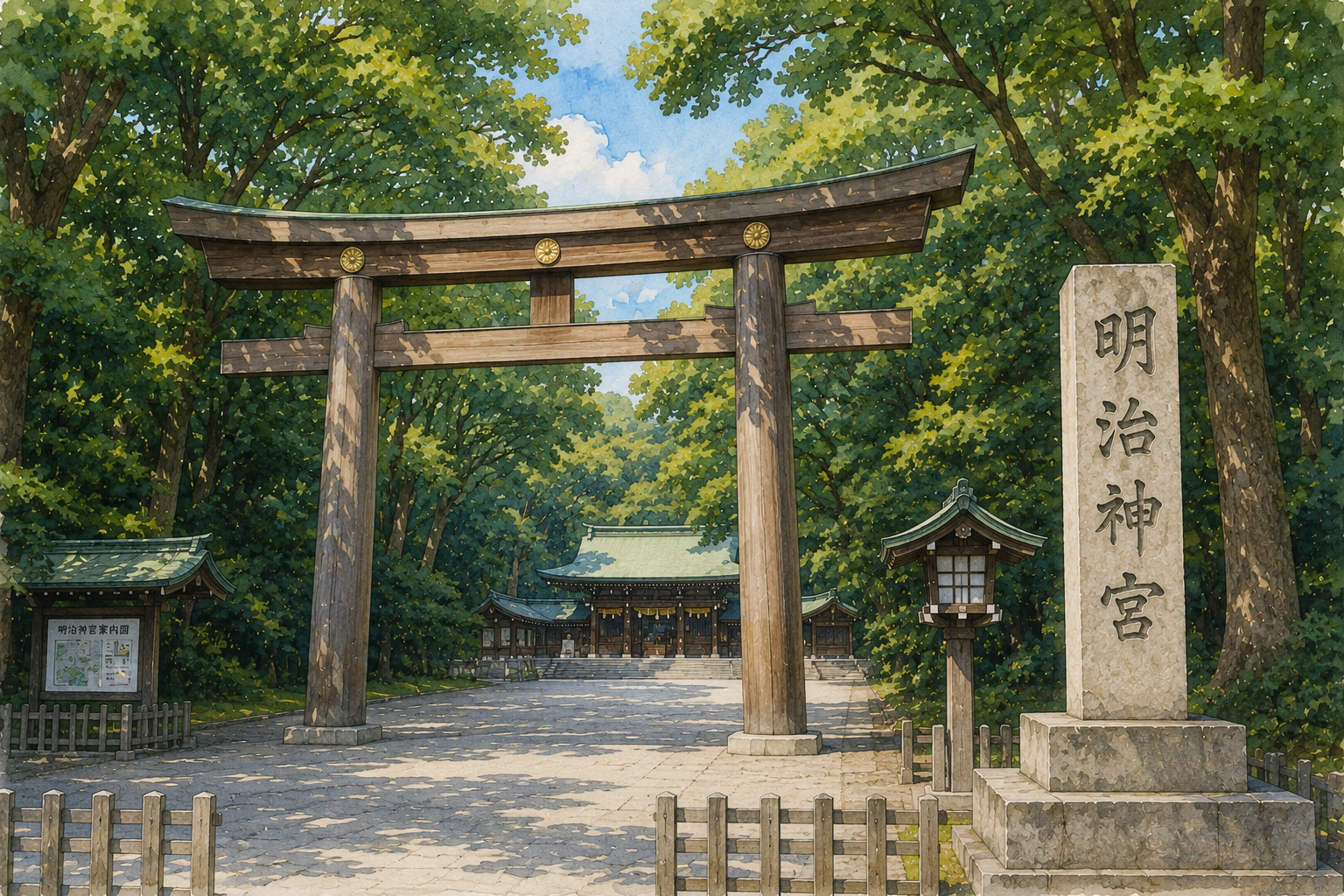
Meiji Jingu
東京都渋谷区代々木神園町1-1
A shrine dedicated to Emperor Meiji and Empress Shoken. Despite sitting close to Shibuya and Harajuku, it is enveloped by a forest planted by hand roughly a century ago, and the approach beneath its great torii gate feels remarkably quiet for central Tokyo.
Leaving the ruins of Edo Castle, we head to Meiji Jingu. As the age of the Tokugawa came to an end, how did Edo transform into Tokyo? At this symbol of modern Tokyo, let's find the answer to the journey that began in Edo.
From Edo to Tokyo
In 1868, following negotiations between the new imperial government's forces and the old shogunate, Edo Castle was surrendered without a battle — an event known as the bloodless surrender of Edo Castle. That same year, Edo was renamed Tokyo, and the capital was moved there from Kyoto. The former Edo Castle became the Imperial Palace, and the castle Dokan had built and Ieyasu had inherited was entrusted with a new role at the center of a new era. A little over fifty years later, in 1920, Meiji Jingu was founded in Shibuya to enshrine Emperor Meiji and Empress Shoken. Edo did not disappear — a new city, Tokyo, was layered on top of it. Beneath the streets of Tokyo we walk today lies more than 500 years of history, one era stacked upon another.
Featured in this story: Emperor Meiji
Edo Lives On, as Tokyo.
Walk the streets of Tokyo, and what you see is a thoroughly modern city. But beneath it lies more than 500 years of Edo's history, layer upon layer.
- Dokan and the Beginning of Edo Hie Shrine
- From Dokan to Ieyasu Edo Castle Ruins
- From Edo to Tokyo Meiji Jingu
This journey is ready to use in the app
We're sharing a file with all the spots and schedule from this article. Download it and import it from the "Schedule" tab in the Bunny Journey app to take this journey with you.
* If you don't have the app yet, install it from the App Store first.