The Invasion of Korea: This Time, Japan Crosses the Sea
歴史事件
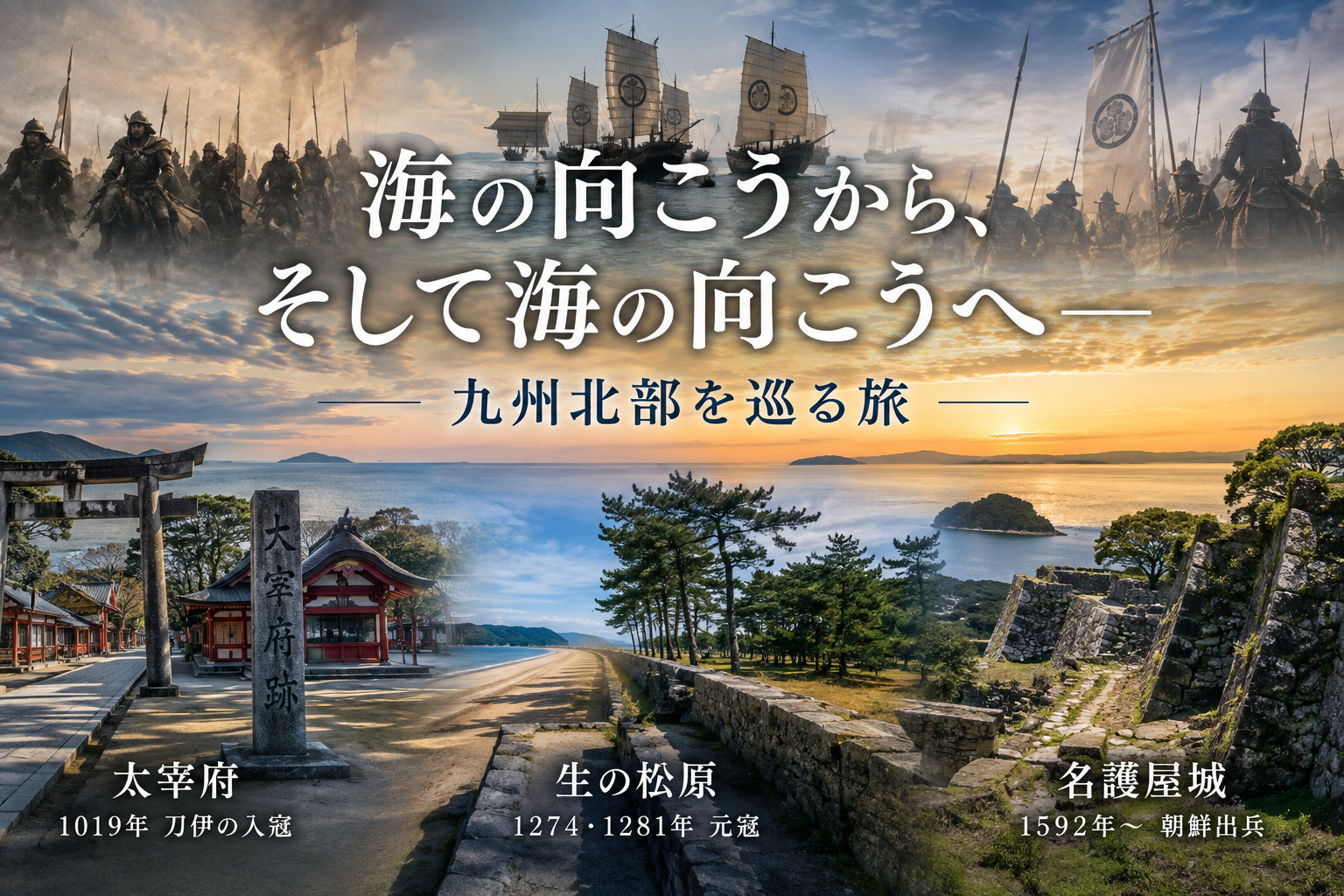
A little over 300 years after the Mongol invasions, in 1590, Toyotomi Hideyoshi defeated the Hojo clan and completed the unification of Japan. Now the country's supreme ruler, Hideyoshi turned his ambitions toward the conquest of Ming China, and as a first step, ordered an invasion of the Korean peninsula. In 1592, Nagoya Castle was built on this site facing the Genkai Sea to serve as the staging base for the campaign. At its completion, Nagoya Castle is said to have rivaled Osaka Castle in scale, and more than a hundred camps belonging to daimyo from across the country sprang up around it — for a time, the area is said to have swelled into a vast camp town housing several hundred thousand people. From here, a great army crossed the sea toward the Korean peninsula (the Bunroku campaign). As the fighting stalled, a temporary truce and negotiations followed, but when talks broke down, a second invasion was launched in 1597 (the Keicho campaign); Japanese forces withdrew only after Hideyoshi's death in 1598. Having twice turned back threats that came from across the sea — first the Toi, then the Mongols — northern Kyushu now became the departure point for a great army crossing the sea in the opposite direction. Today, the ruins of Nagoya Castle preserve stone walls including the base of its former main keep, and from the hilltop overlooking the Genkai Sea, visitors can still gaze out at the very waters that once carried a great army toward the Asian mainland.
Characters
Toyotomi Hideyoshi
ViewSpots
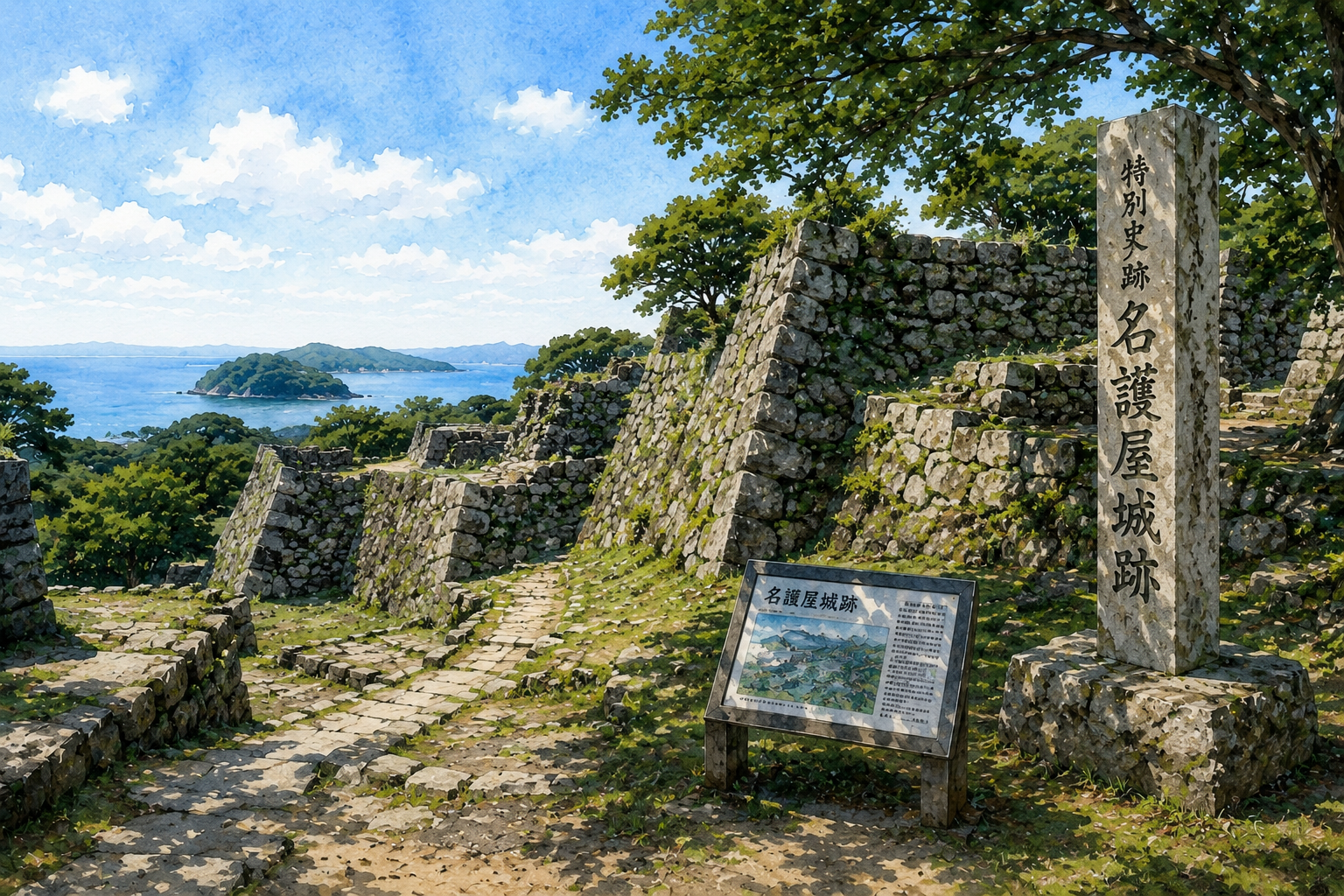
Nagoya Castle Ruins
ViewJourneys