Why Did Osaka Become a City of Merchants?
From Naniwa Palace to the Nation's Kitchen, and Beyond
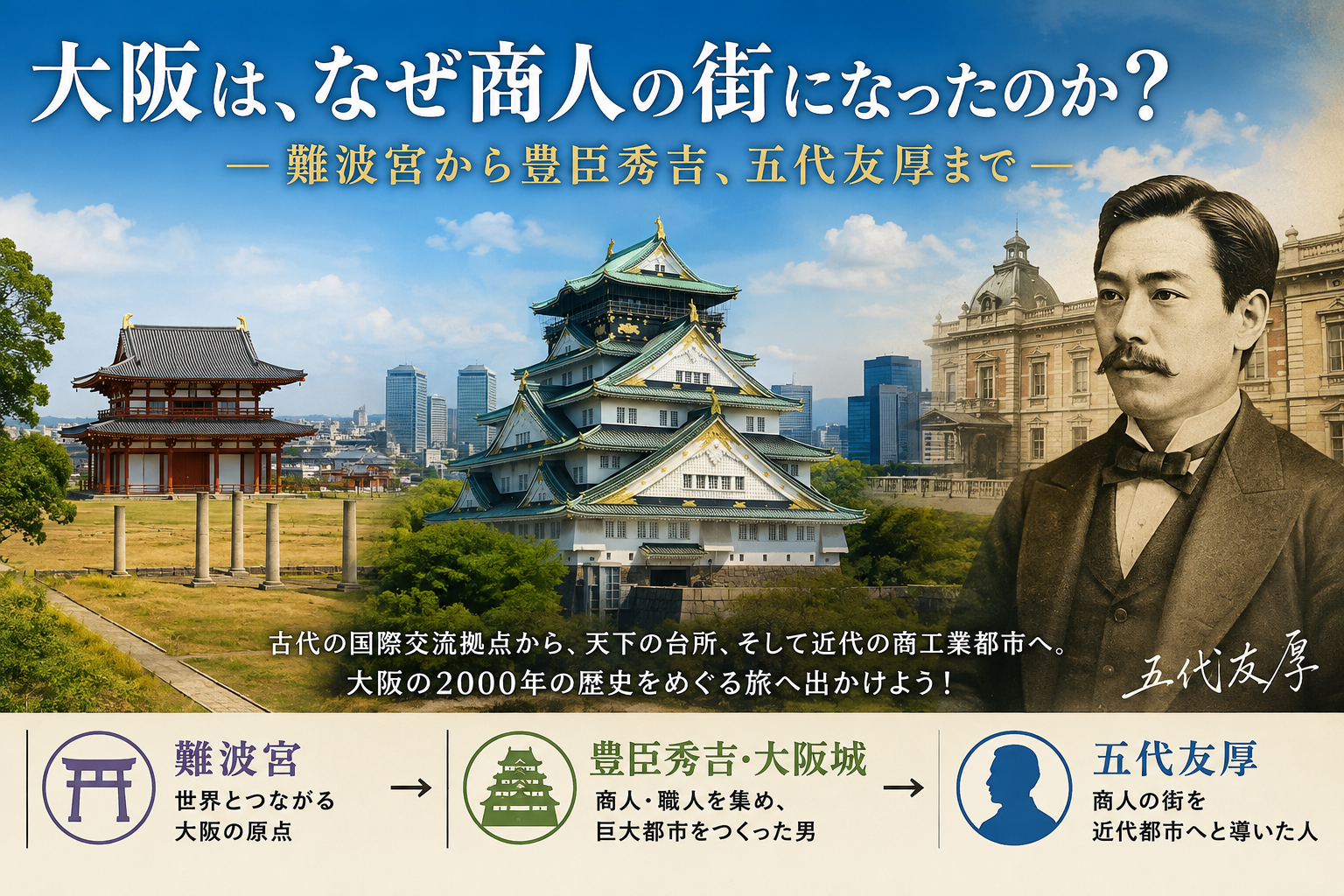
Why did Osaka come to be known as the “city of merchants”? From Naniwa Palace — an ancient diplomatic gateway where envoys once set sail for Sui and Tang China — through the vast castle town built by Toyotomi Hideyoshi, to the Edo-era trading hub known as “the nation's kitchen,” and on into the modernization of the Meiji era: set out on a 2,000-year journey tracing how the city of Osaka was shaped.
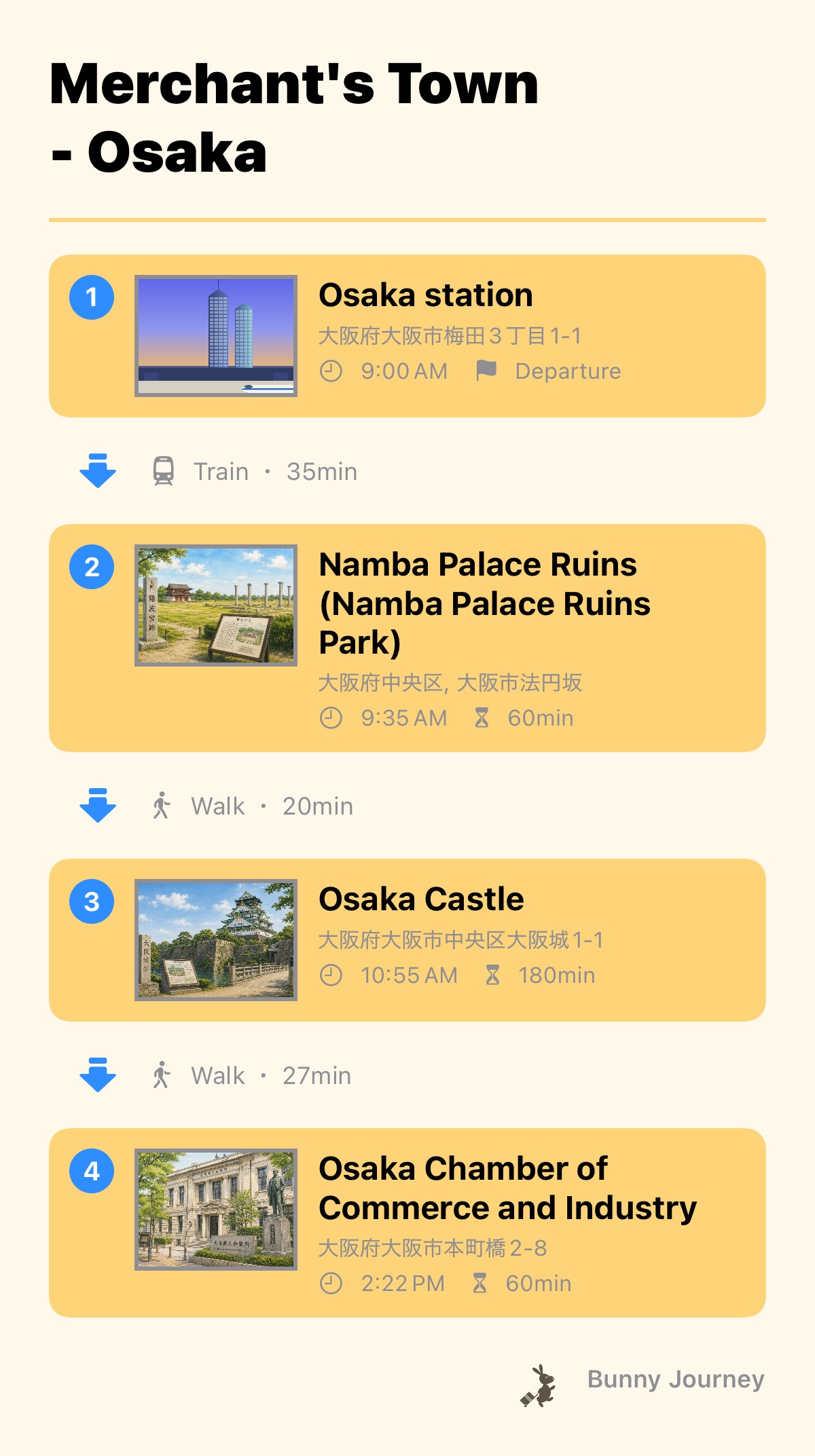
- Number of spots
- 3 spots
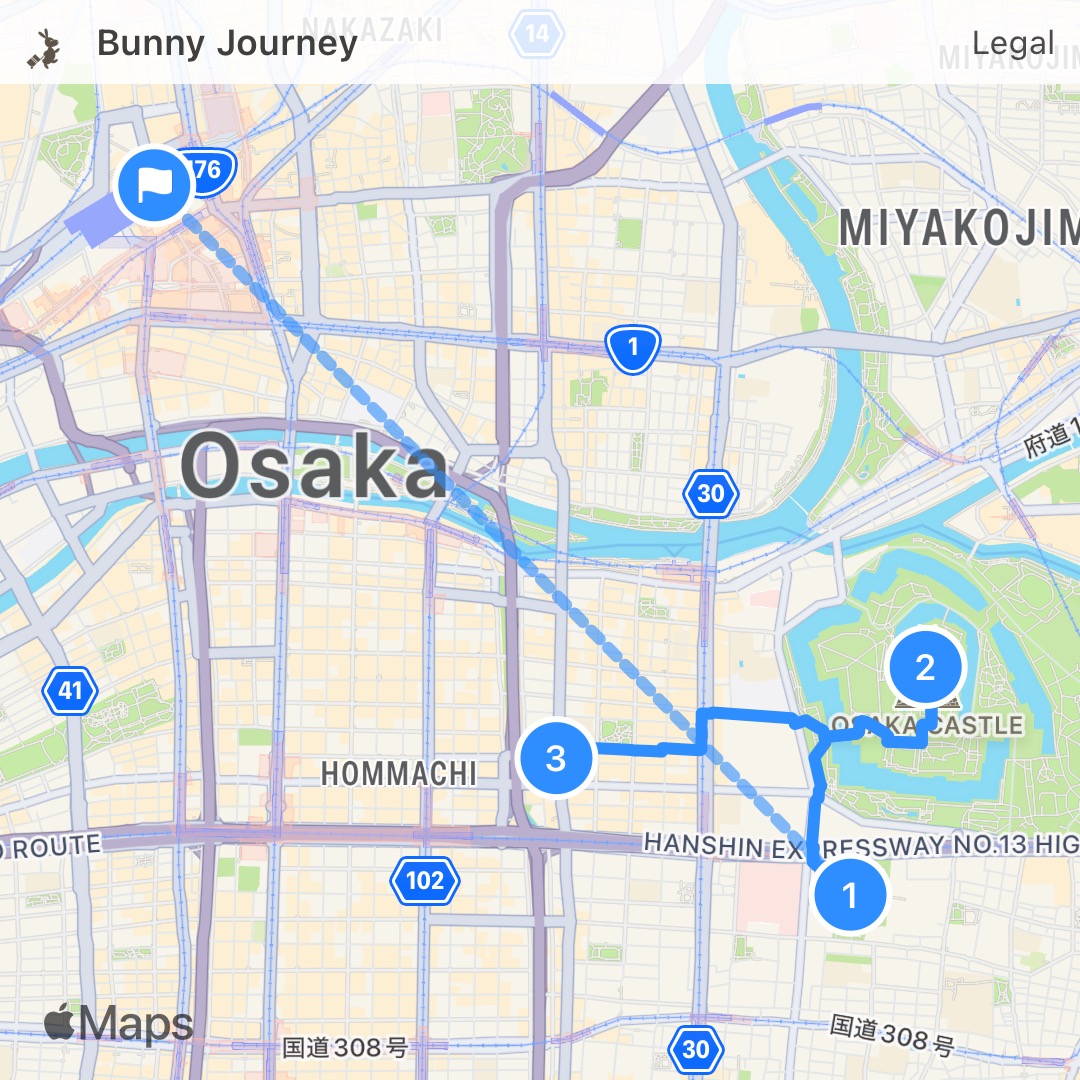
- Travel distance (approx.)
- approx. 2.3km
- Start point
- Naniwa Palace Ruins
- End point
- Osaka Chamber of Commerce and Industry
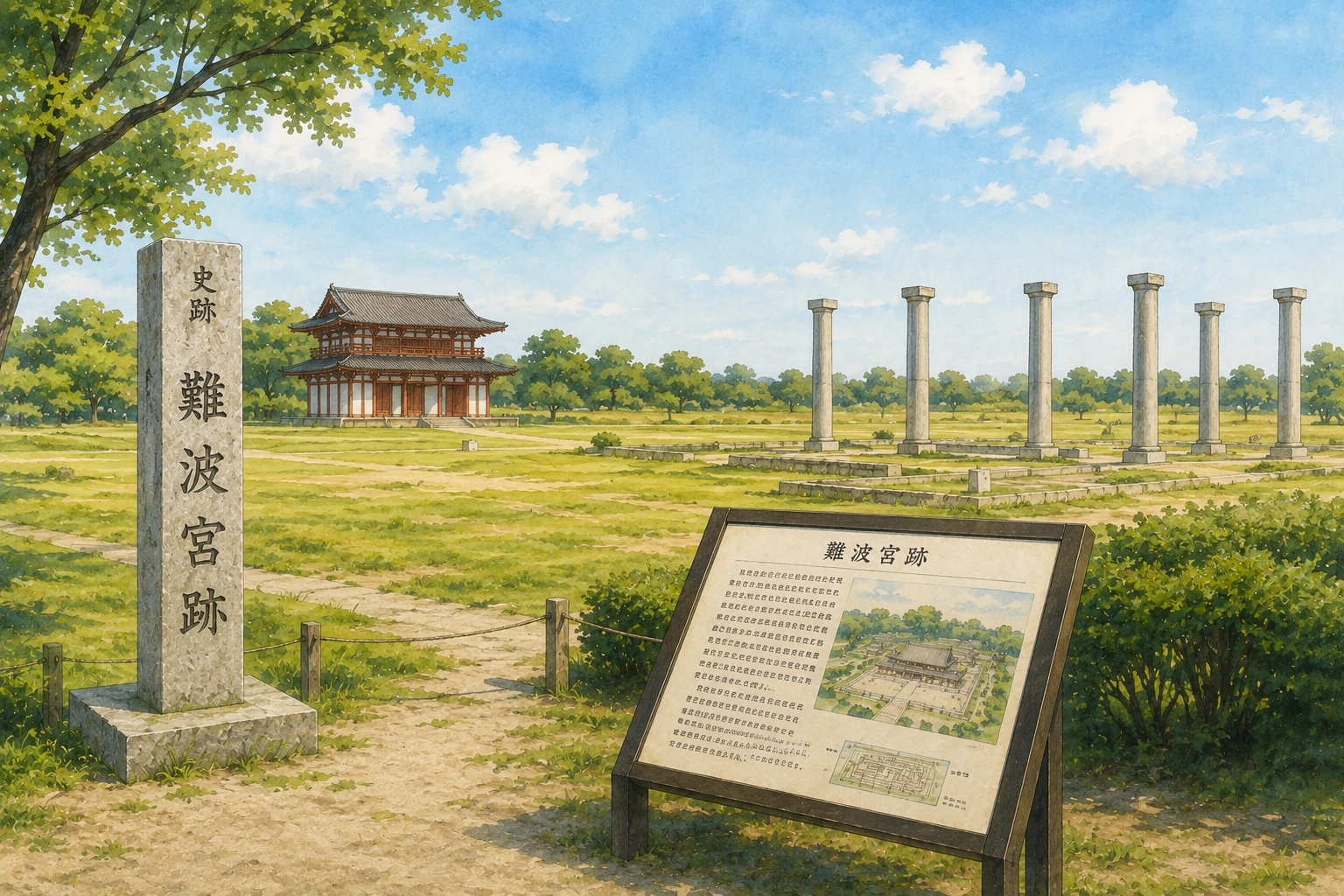
Naniwa Palace Ruins
大阪府大阪市中央区法円坂1丁目
A historic park spreading south of Osaka Castle. The remains of an Asuka- and Nara-period imperial palace are preserved here, including a reconstructed foundation platform and the traces of the palace's pillars. Information boards throughout the park help visitors picture the scale of this ancient capital.
Our journey begins at the ruins of Naniwa Palace. Built during the Asuka period, Naniwa Palace flourished as the diplomatic gateway through which Japan's envoys set sail for Sui and Tang China. Let's trace this origin point of Osaka as a city where people, goods, and cultures once converged.
Naniwa Palace and the City of Diplomacy
After the Taika Reform of 645, Emperor Kotoku moved the capital to Naniwa and built the Naniwa Nagara-Toyosaki Palace. Naniwa had long served as a port linking the Seto Inland Sea to the Yamato heartland, and it was from here that Japan's envoys to Sui and Tang China set sail. In the Nara period, Emperor Shomu again established a palace at Naniwa (the "Later Naniwa Palace"), and each time the capital was placed here, it drew people, goods, and cultures together — laying the foundation of Osaka as a hub of international exchange.
Featured in this story: Emperor Kotoku
Next: Osaka Castle — about 11 min on foot (approx.)
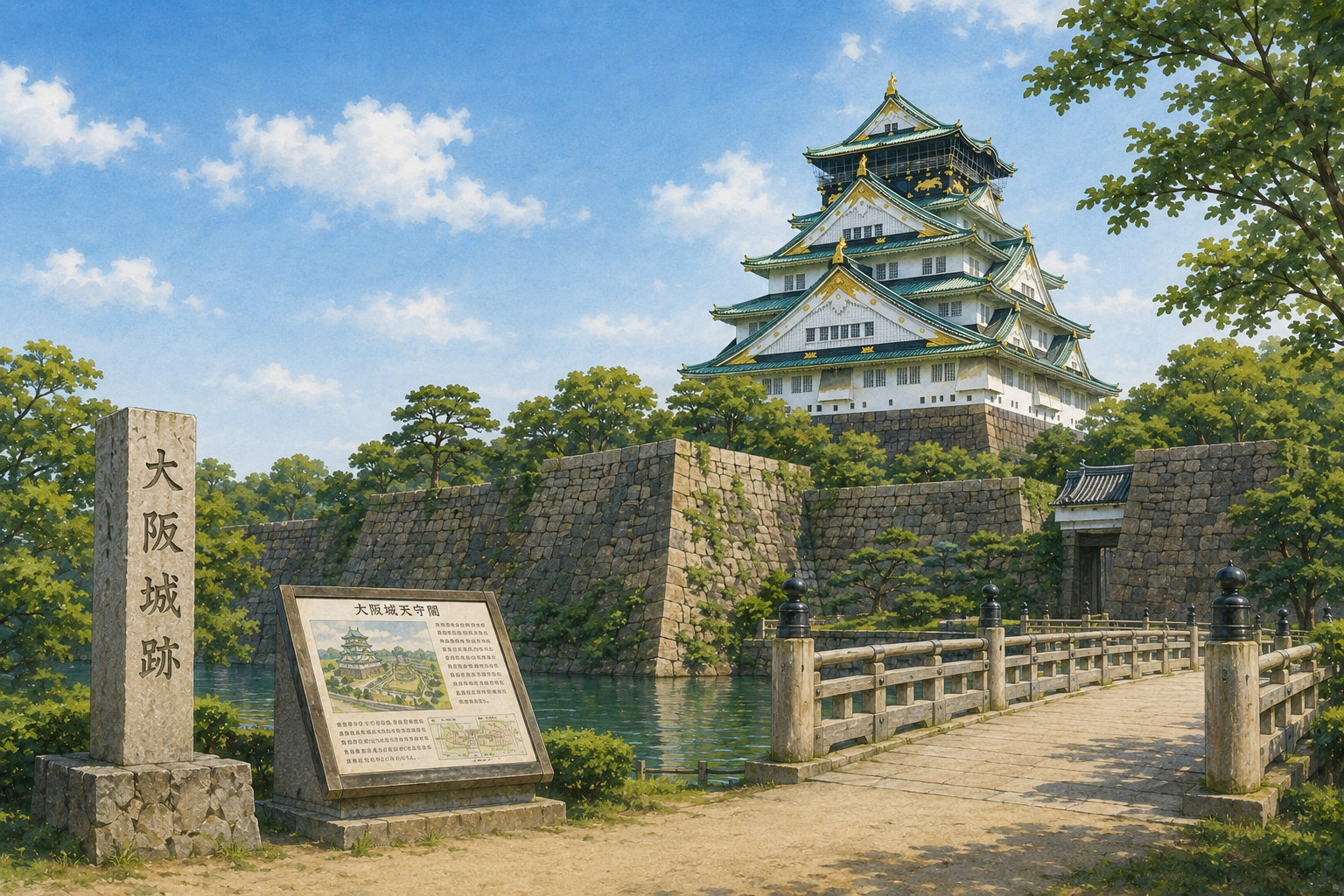
Osaka Castle
大阪府大阪市中央区大阪城1-1
The symbol of Osaka, its keep first built by Toyotomi Hideyoshi and rebuilt during the Tokugawa era. The current keep, reconstructed in 1931, now houses a history museum. The surrounding park preserves the castle's stone walls and moats, conveying the scale of the original fortress.
Leaving the ruins of Naniwa Palace, we head to Osaka Castle. Toyotomi Hideyoshi made this his base, drawing merchants and craftsmen from across the country and building, in a single generation, one of the largest castle towns in Japan.
Osaka Castle and the Birth of a Castle Town
In 1583, Toyotomi Hideyoshi, having succeeded Oda Nobunaga after his death at Honno-ji, began construction of Osaka Castle on the former site of Ishiyama Hongan-ji. To make it his base for unifying Japan, Hideyoshi relocated merchants and craftsmen from Sakai, Fushimi, and elsewhere, forming a vast castle town around the castle. Through this policy, Osaka grew within a short time into one of Japan's leading economic centers, laying the groundwork for its later character as a "city of merchants."
Featured in this story: Toyotomi Hideyoshi
Next: Osaka Chamber of Commerce and Industry — about 18 min on foot (approx.)
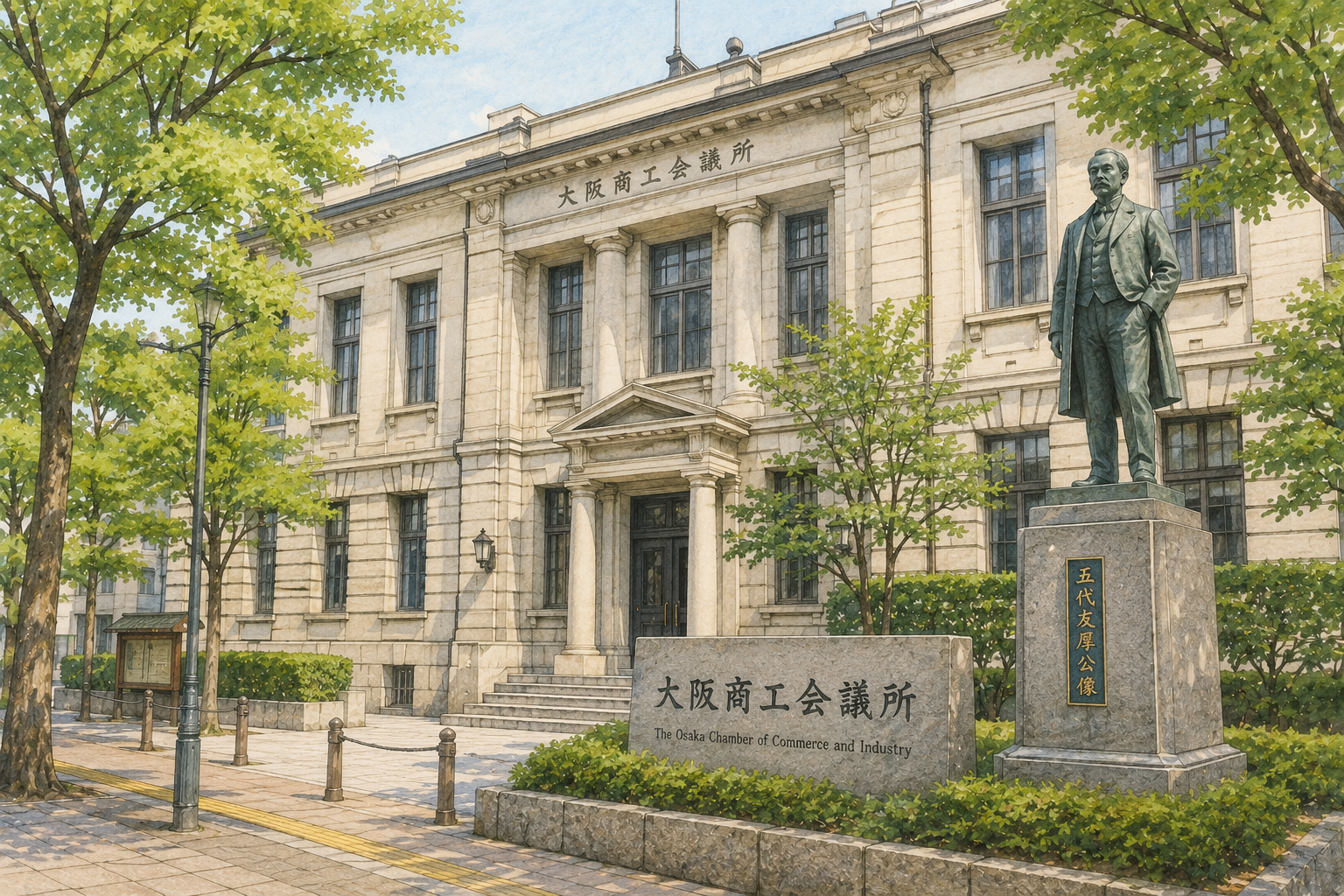
Osaka Chamber of Commerce and Industry
大阪府大阪市中央区本町橋2-8
The headquarters of the Osaka Chamber of Commerce and Industry, founded in the Meiji era. A bronze statue of its first chairman, Godai Tomoatsu, stands on the grounds, a reminder of Osaka's modern economic history. The Chamber remains a central hub of Osaka's business community today.
Leaving Osaka Castle, we head to the Osaka Chamber of Commerce and Industry. The castle town Hideyoshi built grew, during the Edo period, into a great trading city known as “the nation's kitchen.” It was Godai Tomoatsu who led that city of merchants into a modern industrial age.
From the Nation's Kitchen to a Modern Merchant City
During the Edo period, Osaka flourished as "the nation's kitchen" — a commercial city where the warehouses of feudal domains clustered and goods from across Japan converged, centered on the Dojima rice market. After the Meiji Restoration abolished the domain system, however, Osaka's economy fell into serious decline. It was Godai Tomoatsu, a former Satsuma domain retainer turned businessman, who rose to meet this crisis. Together with Osaka's merchants, Godai founded the Osaka Chamber of Commerce (the forerunner of today's Osaka Chamber of Commerce and Industry) in 1878 and served as its first chairman. He was also involved in founding the Osaka Stock Exchange, leading Osaka's economic modernization on both the financial and industrial fronts — earning him the title "father of Osaka's economy."
Featured in this story: Godai Tomoatsu
This Is How Osaka Was Shaped.
From Naniwa Palace to Osaka Castle, and on to the Osaka Chamber of Commerce and Industry — walking this path, from a city of diplomacy, through a warlord's castle town, to a modern city of commerce, reveals how Osaka itself came to be.
- A Port City Connected to the World Naniwa Palace Ruins
- The Ruler Who Gathered the Merchants Osaka Castle
- From Merchant City to Modern Metropolis Osaka Chamber of Commerce and Industry
This journey is ready to use in the app
We're sharing a file with all the spots and schedule from this article. Download it and import it from the "Schedule" tab in the Bunny Journey app to take this journey with you.
* If you don't have the app yet, install it from the App Store first.