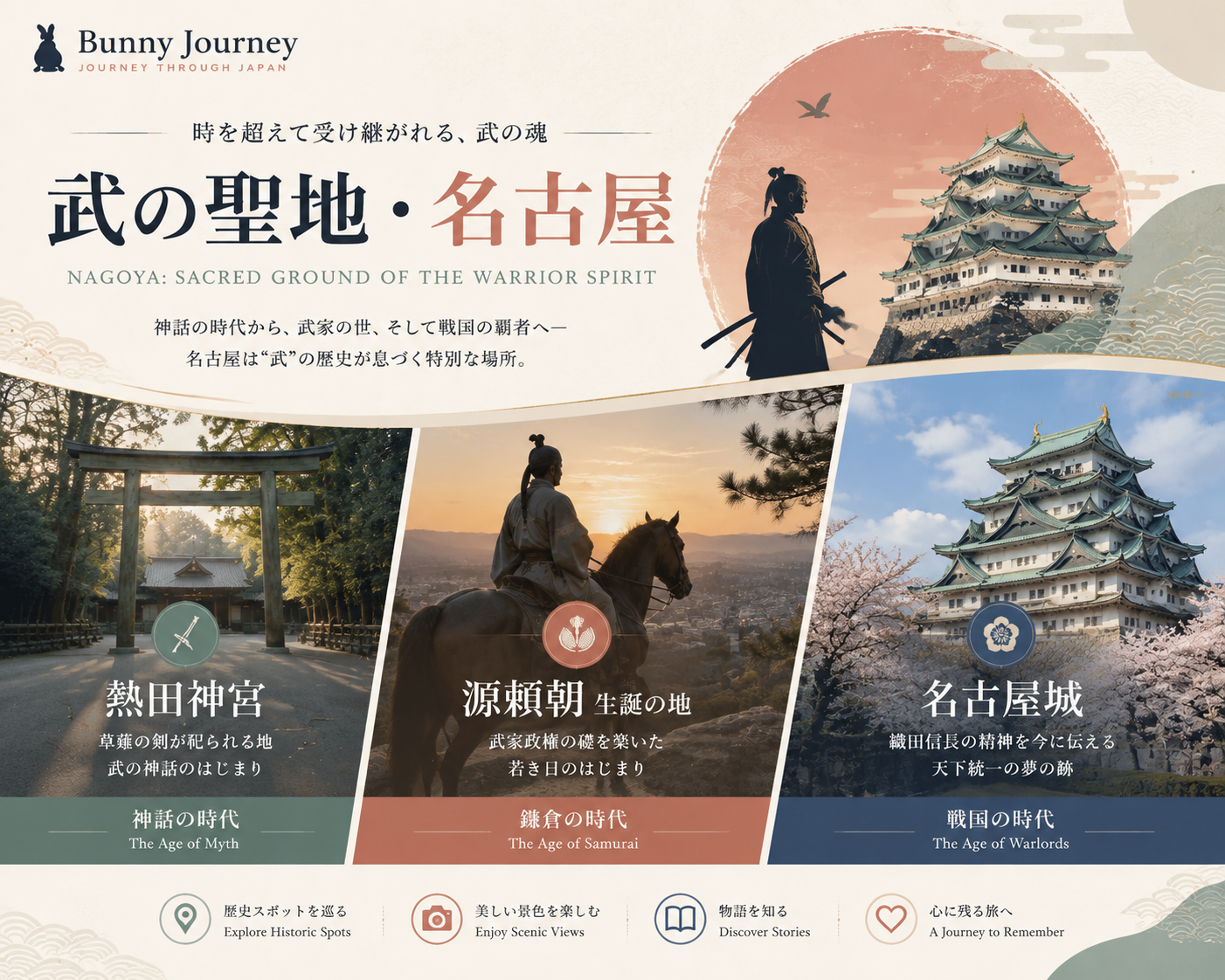
Nagoya: Sacred Ground of the Warrior Spirit
From a Mythical Sword to the Dream of a Unified Japan
How has Japan’s spirit of "bu" — the way of the warrior — been passed down through the ages? From the mythical sword Kusanagi to the dawn of samurai rule, and on to the path toward a unified Japan: set out on a journey that traces this warrior lineage, etched into a single city — Nagoya.
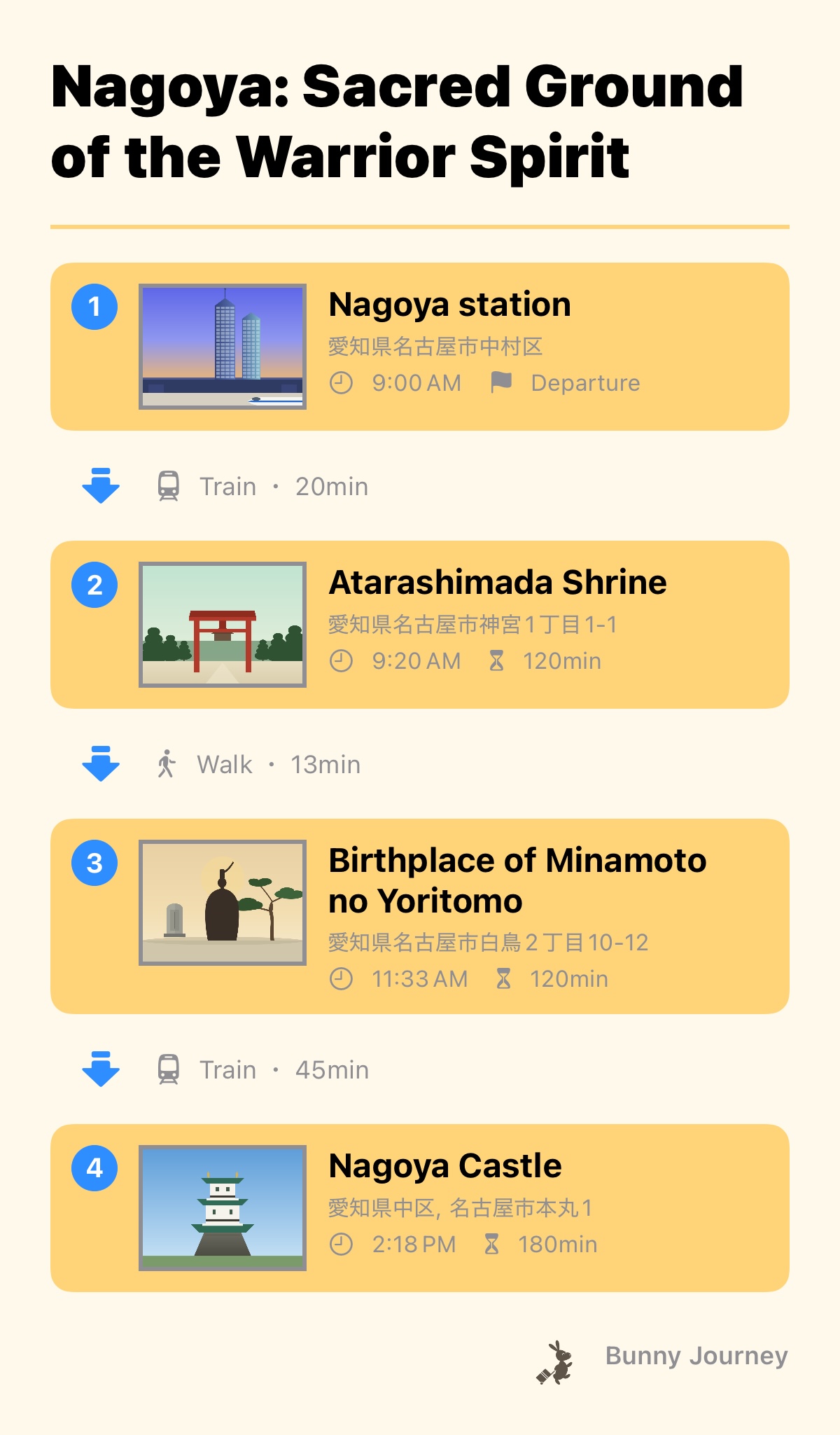
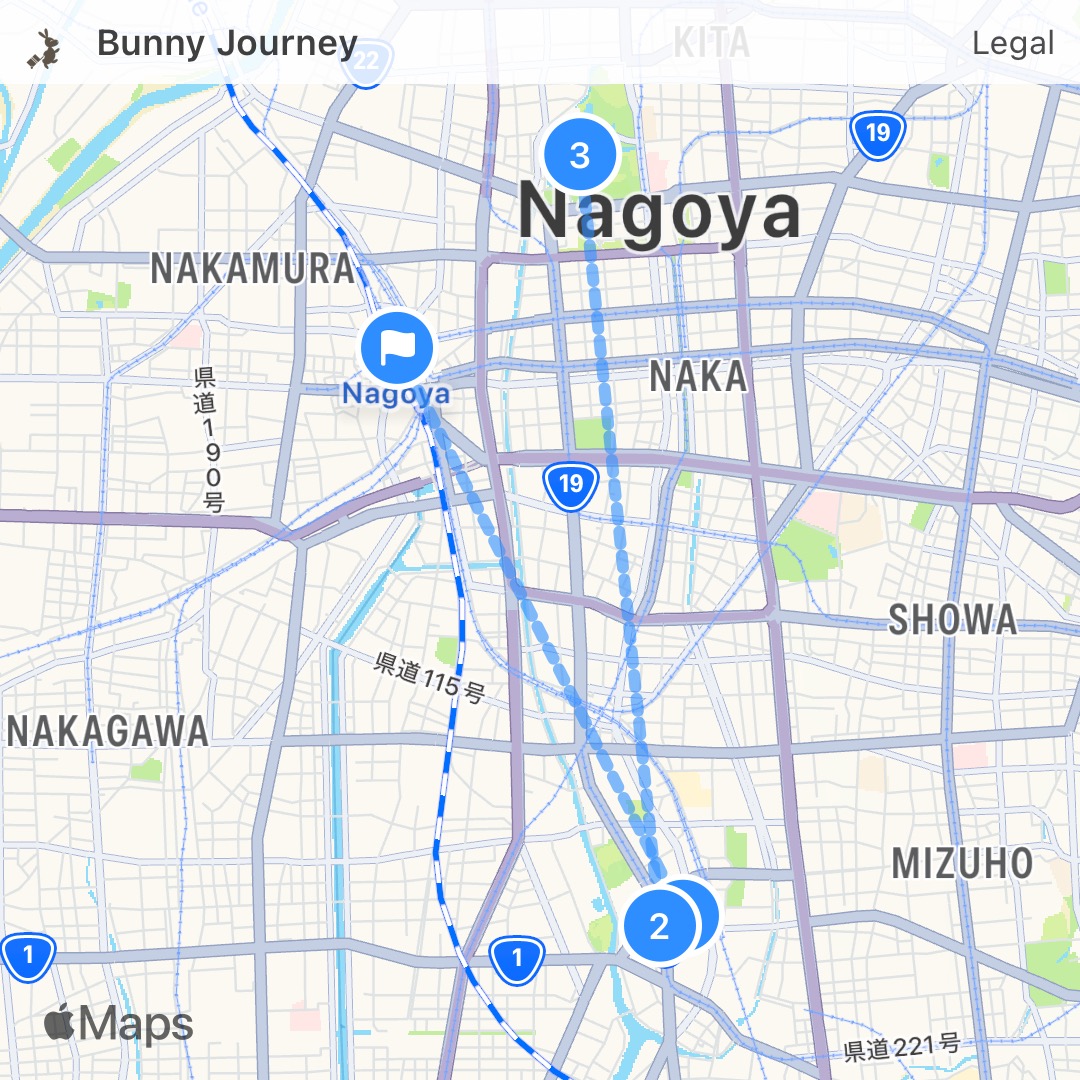
- Number of spots
- 3 spots
- Travel distance (approx.)
- approx. 6.7km
- Start point
- Atsuta Shrine
- End point
- Nagoya Castle
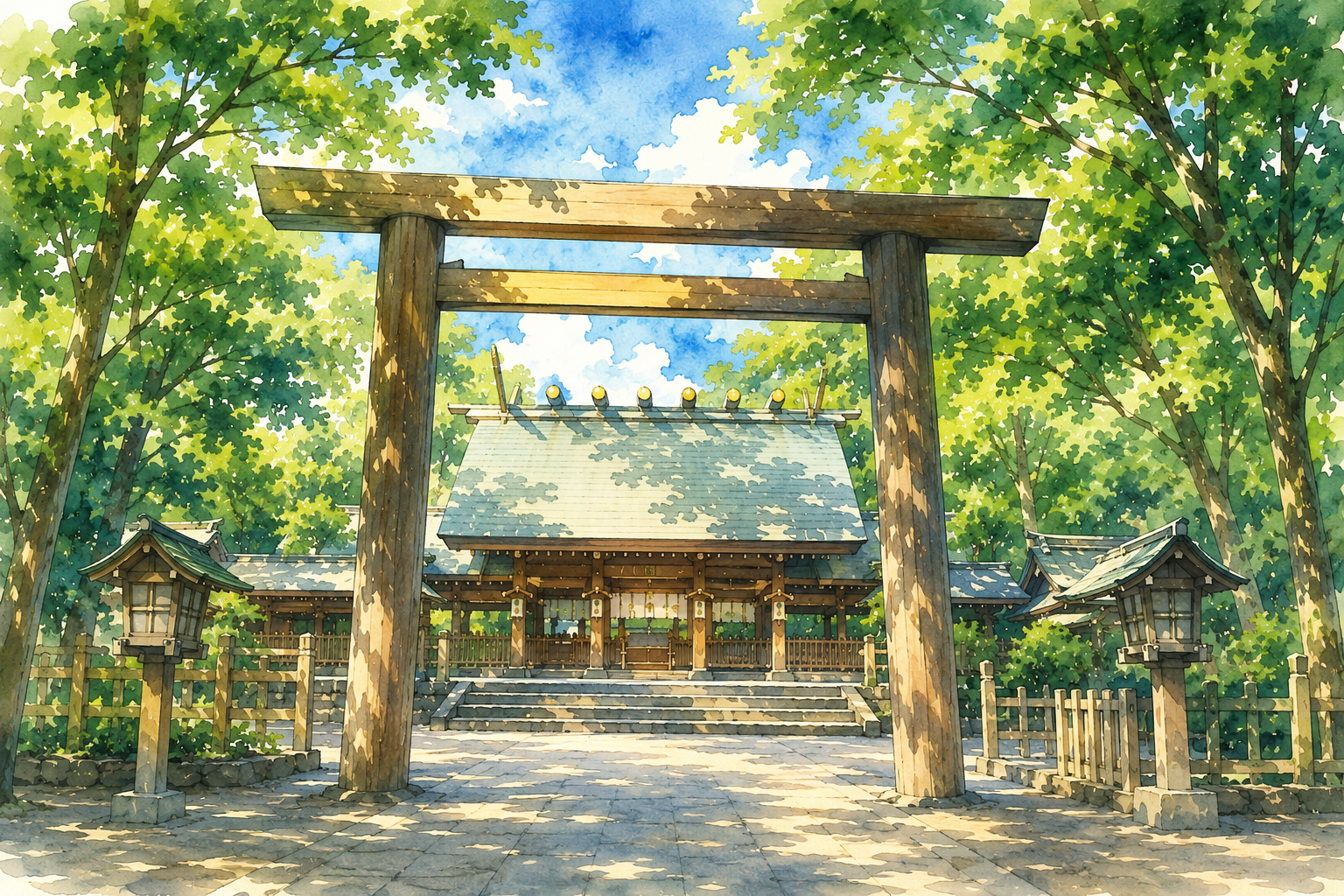
Atsuta Shrine
愛知県名古屋市熱田区神宮1丁目1-1
A shrine enshrining the Kusanagi sword, one of Japan’s Three Sacred Treasures. Said to have been founded when Miyazu-hime, consort of Yamato Takeru, enshrined the sword here, it holds a rank second only to Ise Grand Shrine. Within the grounds stands the "Nobunaga Wall," said to have been dedicated by Oda Nobunaga in gratitude for his victory at Okehazama.
Our journey begins at Atsuta Shrine. Enshrined here is the Kusanagi sword, carrying the myth of how Yamato Takeru once overcame great peril. Let’s start by listening to that story.
The Legend of the Kusanagi Sword
While subduing the eastern provinces, Yamato Takeru was ambushed in Suruga province by enemies who set the surrounding fields ablaze. Cornered, he used the sword Ame-no-Murakumo-no-Tsurugi, given to him by his aunt Yamato-hime, to cut away the grass around him and set a counter-fire, escaping the danger. It is from this episode that the sword came to be known as "Kusanagi," or "grass-cutter." After Yamato Takeru’s death, his consort Miyazu-hime enshrined the sword at Atsuta, in Owari province — an act said to mark the founding of Atsuta Shrine.
Featured in this story: Yamato Takeru
Next: Traditional Birthplace of Minamoto no Yoritomo — about 5 min on foot (approx.)
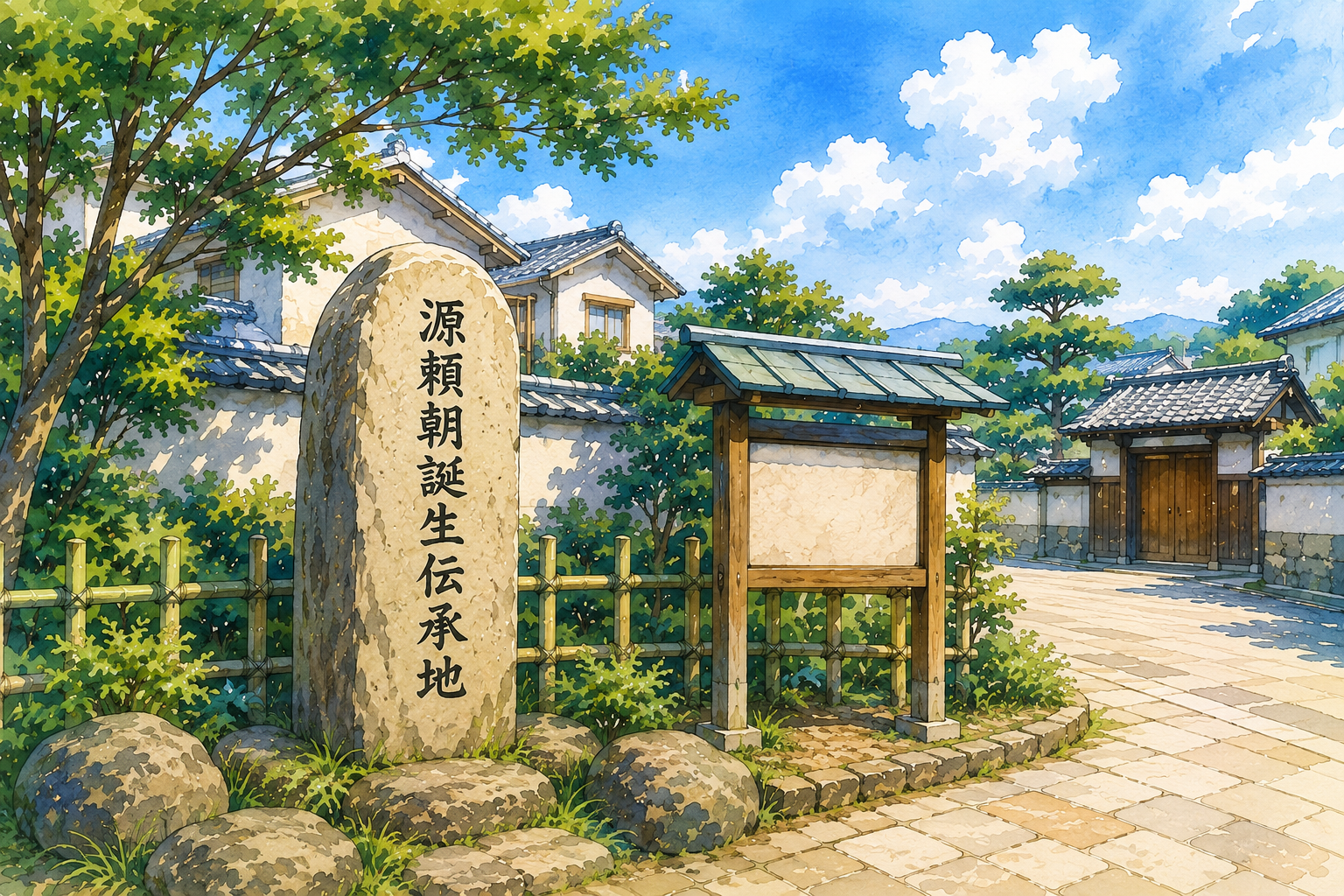
Traditional Birthplace of Minamoto no Yoritomo
愛知県名古屋市熱田区伝馬2丁目
An area traditionally said to be the birthplace of Minamoto no Yoritomo. His mother is said to have come from the Ōgūji family of Atsuta Shrine, making Atsuta an important place in the story of Yoritomo’s origins (this is a tradition, and accounts vary).
Leaving Atsuta behind, we head to a site linked by tradition to the birth of Minamoto no Yoritomo. He too, the man who opened the new age of samurai rule, was deeply tied to this land of Owari.
The Founding of the Kamakura Shogunate
In 1180, Minamoto no Yoritomo raised his banner in Izu, answering Prince Mochihito’s call to arms against the Taira clan. Though defeated at the Battle of Ishibashiyama, he regrouped on the Bōsō Peninsula and went on to organize the warrior bands of the Kanto region from his base at Kamakura. After destroying the Taira at the Battle of Dan-no-ura in 1185, he was appointed Seii Taishōgun in 1192, establishing the Kamakura shogunate — Japan’s first full-fledged warrior government. Yoritomo’s own origins are closely tied to the Ōgūji (chief priestly) family of Atsuta on his mother’s side, making Owari and Atsuta essential ground for understanding his story.
Featured in this story: Minamoto no Yoritomo
Next: Nagoya Castle — a bit further out (about 6.3km as the crow flies). Taking a train or bus is recommended
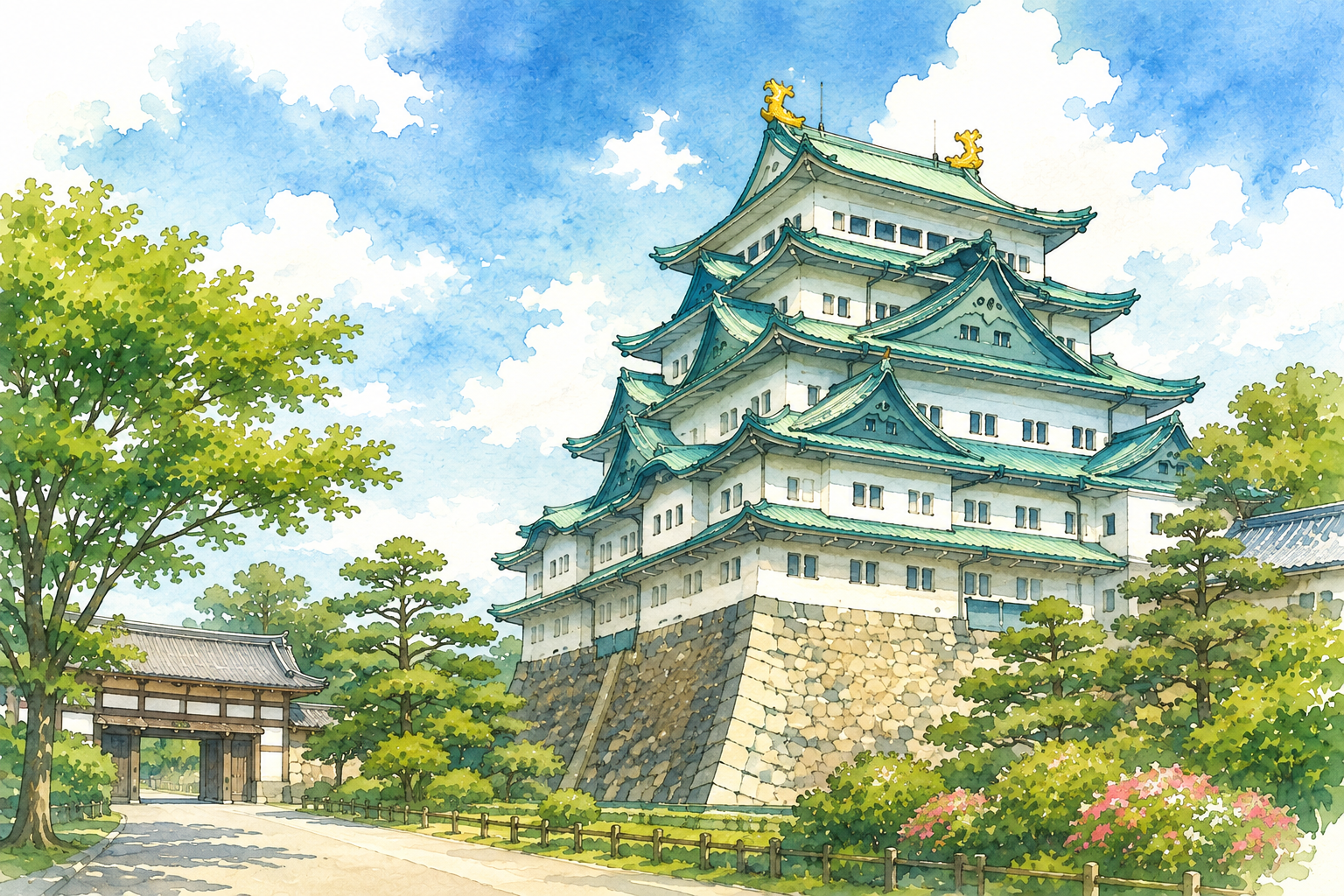
Nagoya Castle
愛知県名古屋市中区本丸1-1
A castle built from 1610 on the order of Tokugawa Ieyasu as the residence of his ninth son, Yoshinao. Known for the golden shachihoko atop its main keep, it stood as a symbol of the Owari Tokugawa family’s authority and laid the foundation for the city of Nagoya.
Our journey ends at Nagoya Castle. The ambition Nobunaga first set in motion at Okehazama was carried forward by Ieyasu, and came to fruition here.
The Road to Tenka Fubu
In 1560, Oda Nobunaga of Owari led a surprise attack at Okehazama against Imagawa Yoshimoto, who had invaded Owari with a much larger army, and struck him down — the Battle of Okehazama. This victory launched Nobunaga’s rapid rise to power, and he made his ambition to unify the realm explicit with the seal "Tenka Fubu." Nobunaga’s ambitions were cut short by the Honnō-ji Incident, but his vision was carried on by his ally Tokugawa Ieyasu, who completed the unification of Japan after his victory at the Battle of Sekigahara and the founding of the Edo shogunate. Nagoya Castle was built at Ieyasu’s order as a stronghold against the Toyotomi loyalists and a base for controlling Owari, for his son Yoshinao.
Featured in this story: Oda Nobunaga・Tokugawa Ieyasu
Walk it, and it starts to connect.
Each stop can look separate on its own, but walking them in order draws them into a single journey.
- The Mythical Sword Atsuta Shrine
- The Birth of the Samurai Traditional Birthplace of Minamoto no Yoritomo
- The Path to a Unified Japan Nagoya Castle
This journey is ready to use in the app
We're sharing a file with all the spots and schedule from this article. Download it and import it from the "Schedule" tab in the Bunny Journey app to take this journey with you.
* If you don't have the app yet, install it from the App Store first.